


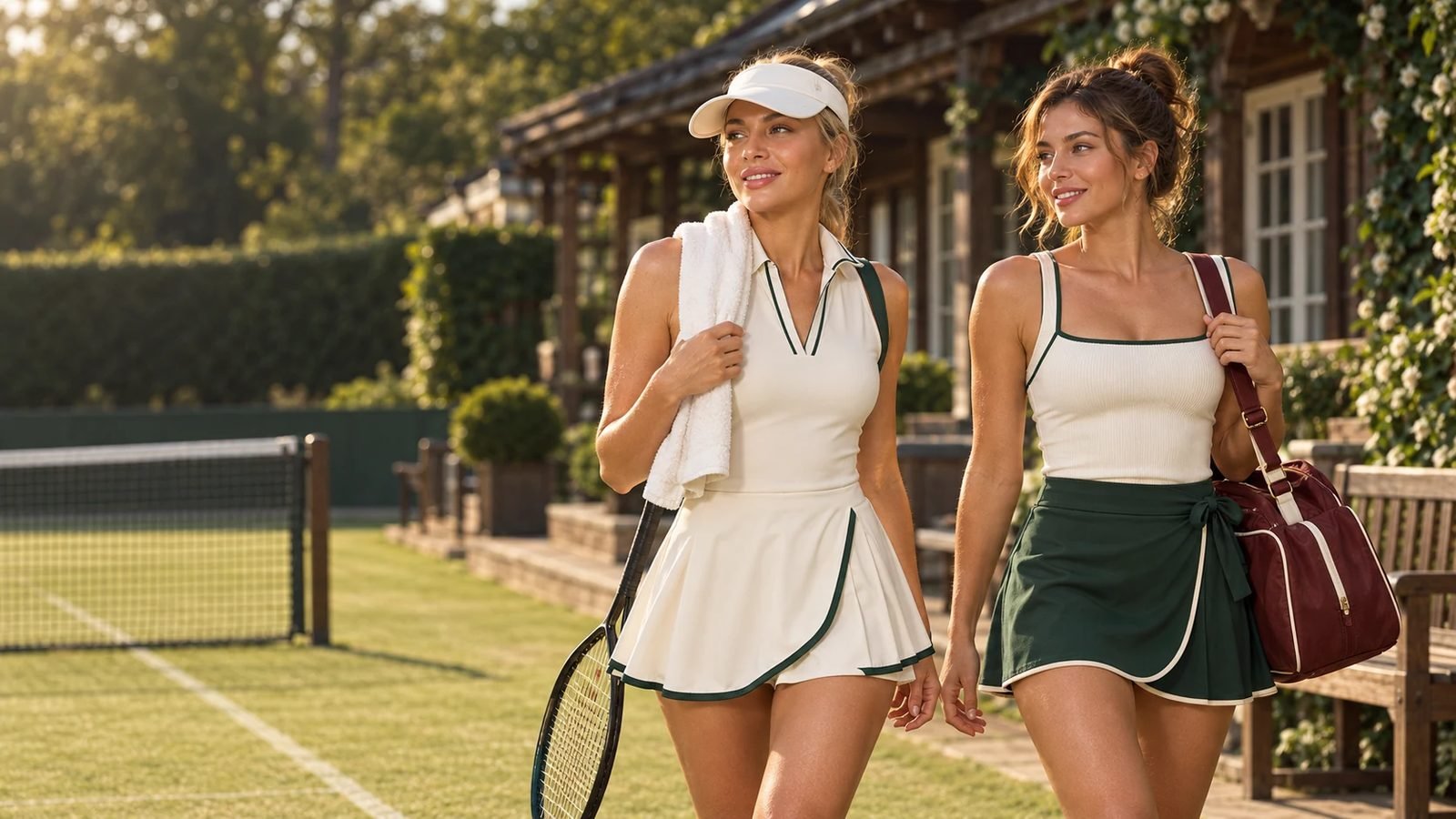
Racquet sports are having a long moment. Tennis participation keeps climbing, pickleball courts are appearing inside retired big-box stores, and golf is drawing a younger crowd that dresses differently than the one before it. For activewear brands, the interesting part is not the sports themselves but the garment they share. The skort, a skirt with a short built underneath, is the common silhouette across all three, and it has become one of the most requested expansion categories we hear about from brands that already sell leggings and sports bras.
This guide is written for founders and product developers planning a custom tennis skirts order, whether the hangtag says tennis, golf or pickleball. It covers the fabric choices that decide how a skort feels and performs, the construction details that belong in your spec sheet, and what a factory needs from you before the first sample gets cut.
Why Activewear Brands Are Adding Racquet-Sport Styles
The expansion logic is unusually clean. Your customer already plays. The woman who buys your high-waisted leggings is, in large numbers, the same woman booking a court on Saturday morning, and she wants her activewear brand to dress her there too. You are not acquiring a new audience. You are following an existing one into an adjacent category.
The production logic is just as friendly. A skort is built from the same stretch knit family as yoga bottoms, so a tennis skirt manufacturer is typically a factory already fluent in nylon-spandex and polyester-spandex, flat seams and elastic waistbands. Pattern work and fit intent differ, but the machinery, the fabric suppliers and the sewing skill all carry over from a leggings line.
Retail timing adds pressure. Courtwear has crossed into everyday fashion, which means a golf skort sells to customers who have never held a club. Brands that wait for the trend to peak before developing will land after it, because sampling, fitting and production take a full season to do properly.
Telas Specs for Skorts
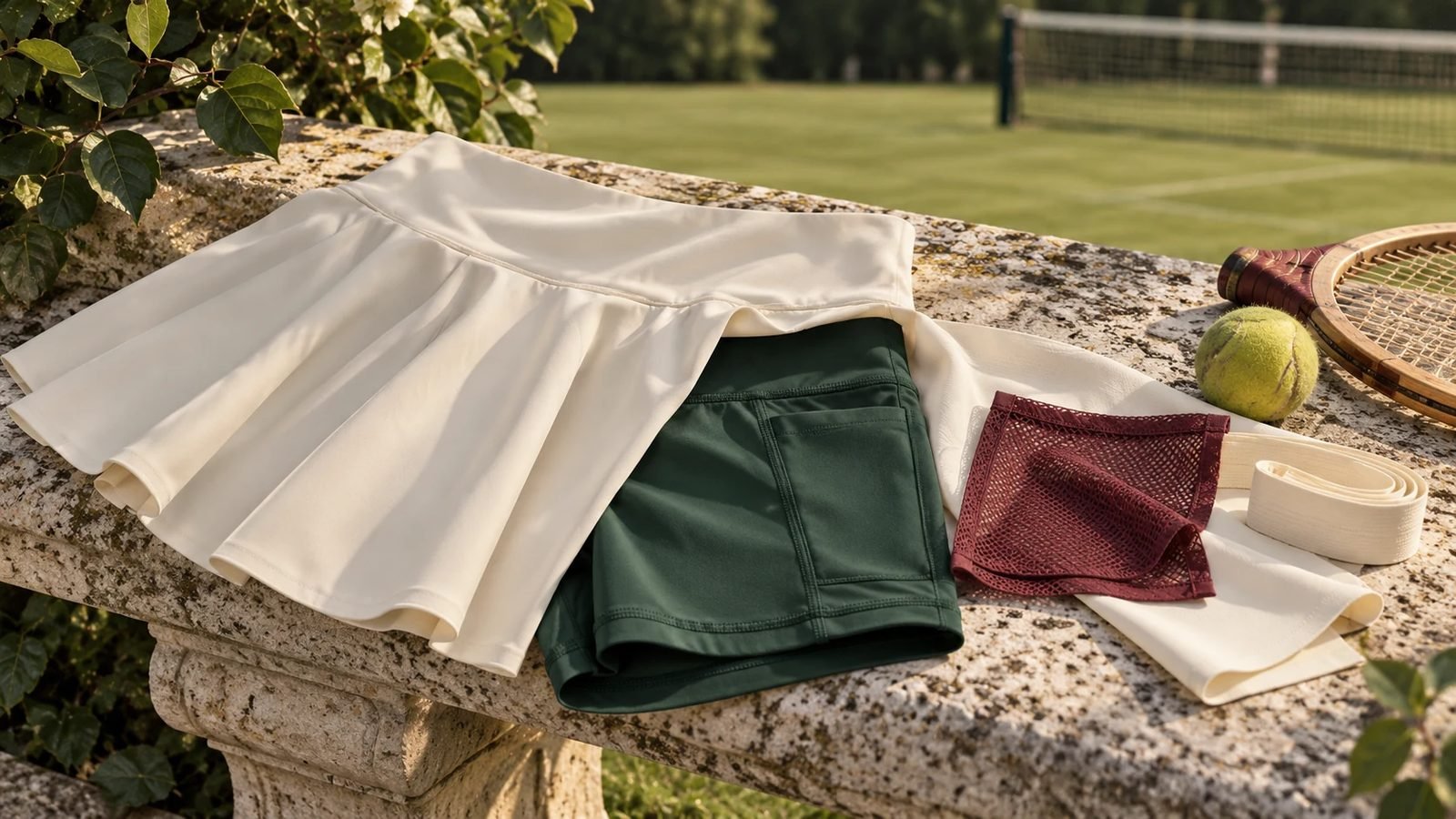
The nylon-spandex route gives you the soft, matte, brushed hand feel that premium activewear customers associate with high-end yoga wear. It drapes beautifully in the overskirt and photographs well, which matters for a category that lives on social media. The polyester-spandex route runs slightly crisper and slicker, holds vivid prints with better color saturation, and generally costs less at comparable quality levels. Price-led lines and print-heavy collections usually land on polyester, while boutique and studio-positioned brands lean nylon.
Whichever base fiber you choose, the functional finishes are what make a skort court-ready rather than studio-only. Moisture-wicking and quick-dry treatment handle a three-set match in July. UPF 50+ sun protection covers outdoor play, and it is a claim customers increasingly look for on the hangtag. Cooling finishes have moved from novelty to expectation in warm-weather markets. All four are standard options in our fabric library, and any serious supplier should offer them without drama.
Here is the decision most first-time skort specs miss: the overskirt and the built-in short want different fabrics, and you should spec them separately. The overskirt wants a lighter, drapier knit with enough flow to move well, since stiffness reads as cheap the moment she walks. The short wants more substance and snap, a higher spandex share with genuine compression and recovery, because it does the garment’s actual work. Cutting both components from one fabric to save a step is a false economy that surfaces in reviews.
Construction Decisions That Belong in Your Spec
Factories build what you write down, and skorts have more writable decisions than most categories. The built-in short comes first. Inseam length sets the personality of the garment: a shorter inseam reads sporty and shows more leg, a longer one suits modest markets and older customers, and the wrong choice for your audience will sink an otherwise good product. Leg openings need a stay-put solution, most often a soft silicone gripper tape or a compressive folded hem, because a short that rides up during a serve gets the skort returned.
Pockets are now table stakes rather than a bonus. A ball pocket on the short, sized and angled so a tennis ball sits securely upside down, is the detail players check first. A phone pocket, usually a second sleeve on the opposite leg, serves the much larger crowd who will never carry a ball. Both belong in the spec with placement sketches, because retrofitting them after sampling wastes a development round.
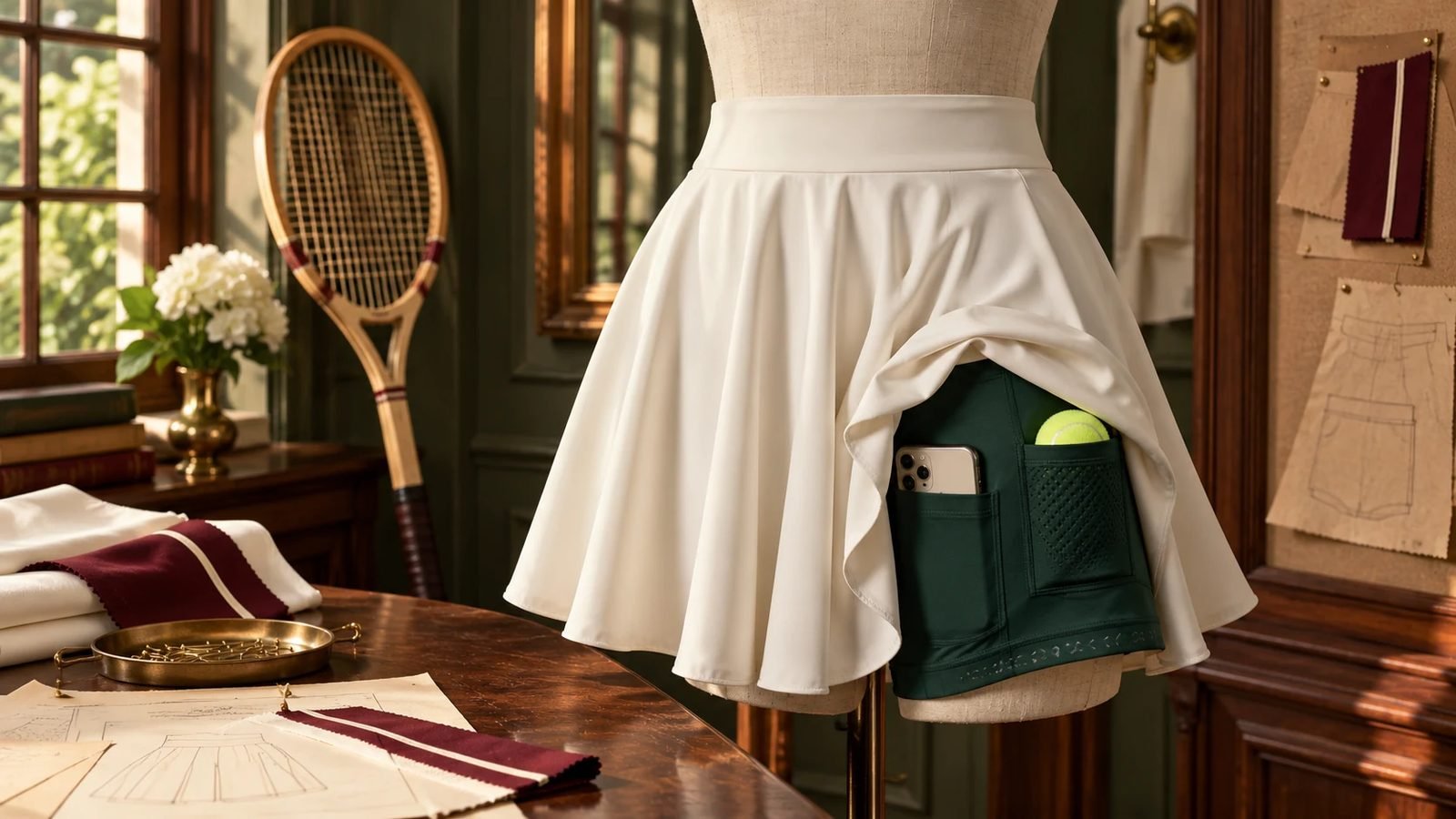
Silhouette and waistband choices define the range. An A-line cut flatters broadly and sells steadily, a swing or circle cut moves dramatically and photographs well, and pleats carry the classic tennis association but add sewing cost and pressing labor. Waistband height should match your existing bottoms so customers can buy on habit, and a wide, double-layer band holds the garment up through lunges. Skirt length typically runs from micro and flirty to just above the knee, and most launch ranges cover two lengths rather than one.
Sizing is a commercial decision disguised as a technical one. We grade to US, EU and AU conventions including plus and petite, and the grading question belongs in your first conversation, not the third. A plus-size skort is not a graded-up size small, because the short needs its own rise and thigh adjustments, so flag the size range early if you plan to serve it properly.
When you send an inquiry, the details below are the ones that turn a vague request into a quotable order:
- State the sport and the customer first, because tennis, golf and pickleball buyers weight length and pockets differently.
- Nombre your fabric direction and the functional finishes you need, such as UPF 50+ or cooling.
- Give the short inseam, the skirt length and the leg-opening solution you want tested.
- Describe pockets by what they must hold, a ball or a phone, and where.
- Attach reference photos for silhouette, since “A-line” and “pleated” mean slightly different things to every pattern maker.
- List your size conventions and any plus or petite range up front.
Decoration and Branding on Skorts
Skorts offer less branding real estate than a hoodie, so placement earns real thought. Heat transfer logos are the workhorse here because they sit flat, stretch with the knit and add no weight, which suits the left hip of the overskirt or the back of the waistband. Embroidery reads more premium and fits the country-club end of the golf market, but it needs a stabilized placement, and a waistband or a pleat base handles it better than a stretchy panel.
Woven labels, care labels, hangtags and packaging carry the rest of the private label story. That topic deserves its own guide rather than a rushed paragraph, so we will leave the full branding checklist for a dedicated piece on private label execution.
From Inquiry to First Muestra
A factory can start from two kinds of input, and both work. A tech pack with flat sketches, measurements and fabric callouts is the gold standard because it removes guesswork. A physical reference sample, the skort your designer loves and wants modified, is almost as good and sometimes faster, because the pattern team can measure it directly and you can mark changes on the garment itself.
Either way, expect the first questions to be about fabric direction, target price and size range rather than styling. At Enjoy Apparel, our sportswear line includes tennis skirts in active production, and because we develop in the same stretch knits as our yoga wear, the fabric conversation usually shortens to pulling cards from our library of more than 5,000 options. Club shops and brand clients who ask about social compliance get a straight answer: we are a BSCI-audited factory, and audit paperwork goes out with the development file on request.
Once fabric, colors and the spec sheet are locked, a first sample takes 14 to 21 days in our sampling room, with fit revisions moving faster after that because the pattern already exists. The full journey from first email to bulk production follows the same stages as any custom order with us, and our custom process page maps each one.
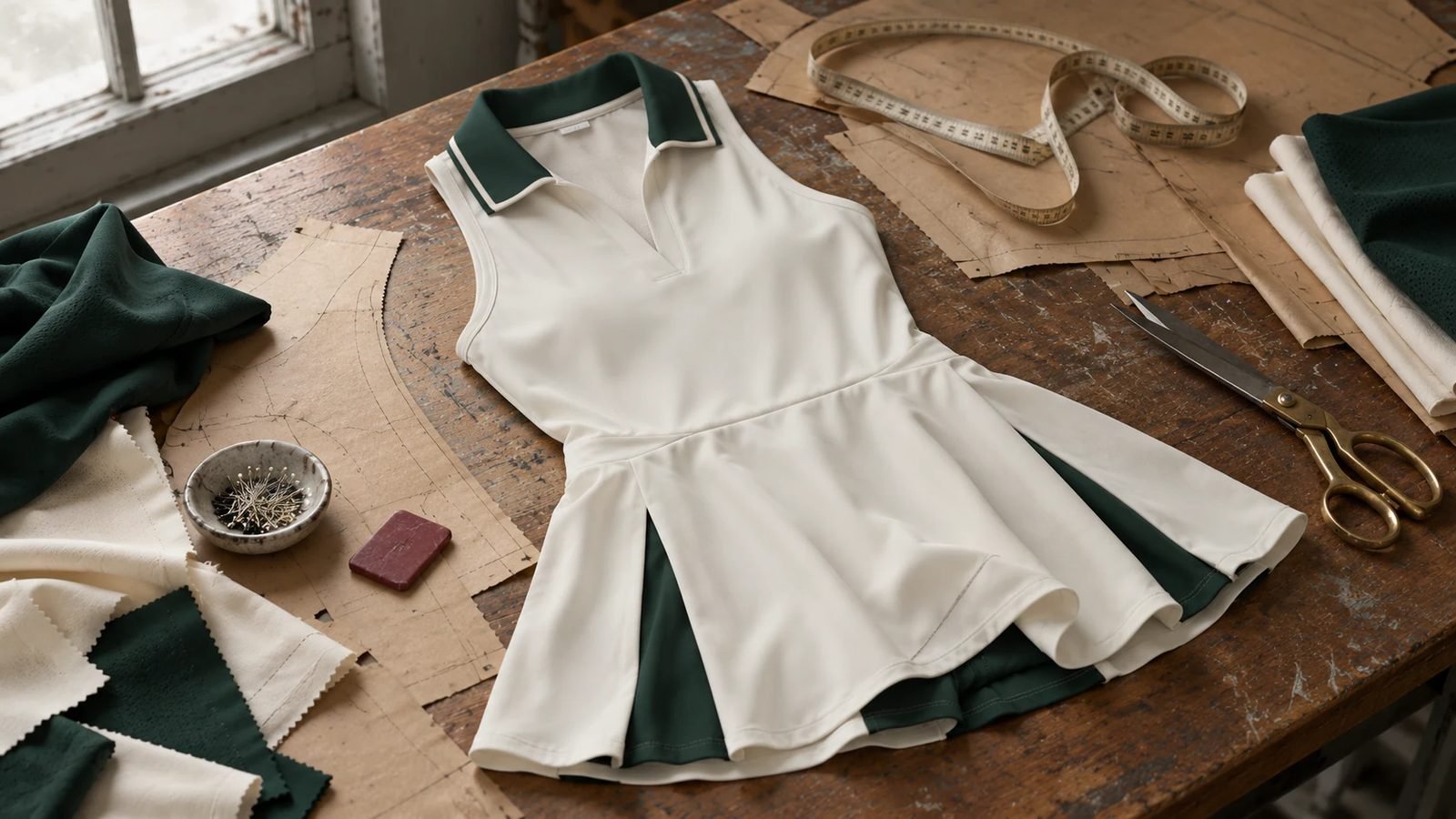
The short version is this. Spec the overskirt and the short as two fabrics, write down the inseam, pockets and silhouette decisions, flag your size range early, and start from a reference garment if you have one. If a racquet-sport capsule is on your roadmap, message us on WhatsApp at +852 9641 7199 and we will send fabric cards for both routes, nylon and polyester, so you can feel both before committing to a sample. Or reach the team through our contact page if email suits you better.
Frequently Asked Questions
What is the difference between a tennis skirt and a skort?
A tennis skirt traditionally means a skirt with a separate or attached brief underneath, while a skort has a fitted knit short built in. In current activewear the terms blur, and most products sold as tennis skirts today are technically skorts. For manufacturing purposes, the built-in short is the standard construction, and your spec should state the short’s inseam and fabric regardless of which word goes on the hangtag.
Can one skort pattern serve tennis, golf and pickleball?
Mostly yes, because the silhouette is shared across the three sports. The adjustments are in length, pockets and fabric positioning rather than the base pattern. Tennis buyers expect a ball pocket, golf-leaning ranges run longer and more tailored, and pickleball sits between them. Many brands launch one base pattern with two lengths and let colorways and marketing do the sport-specific work.
What size ranges can you produce for custom tennis skirts?
We grade to US, EU and AU size conventions, including plus and petite ranges. Extended sizes need their own fit work on the built-in short rather than simple grading, so the earlier you flag the range, the better the first sample fits. Size charts and grading rules are part of the development conversation, not an afterthought.

