


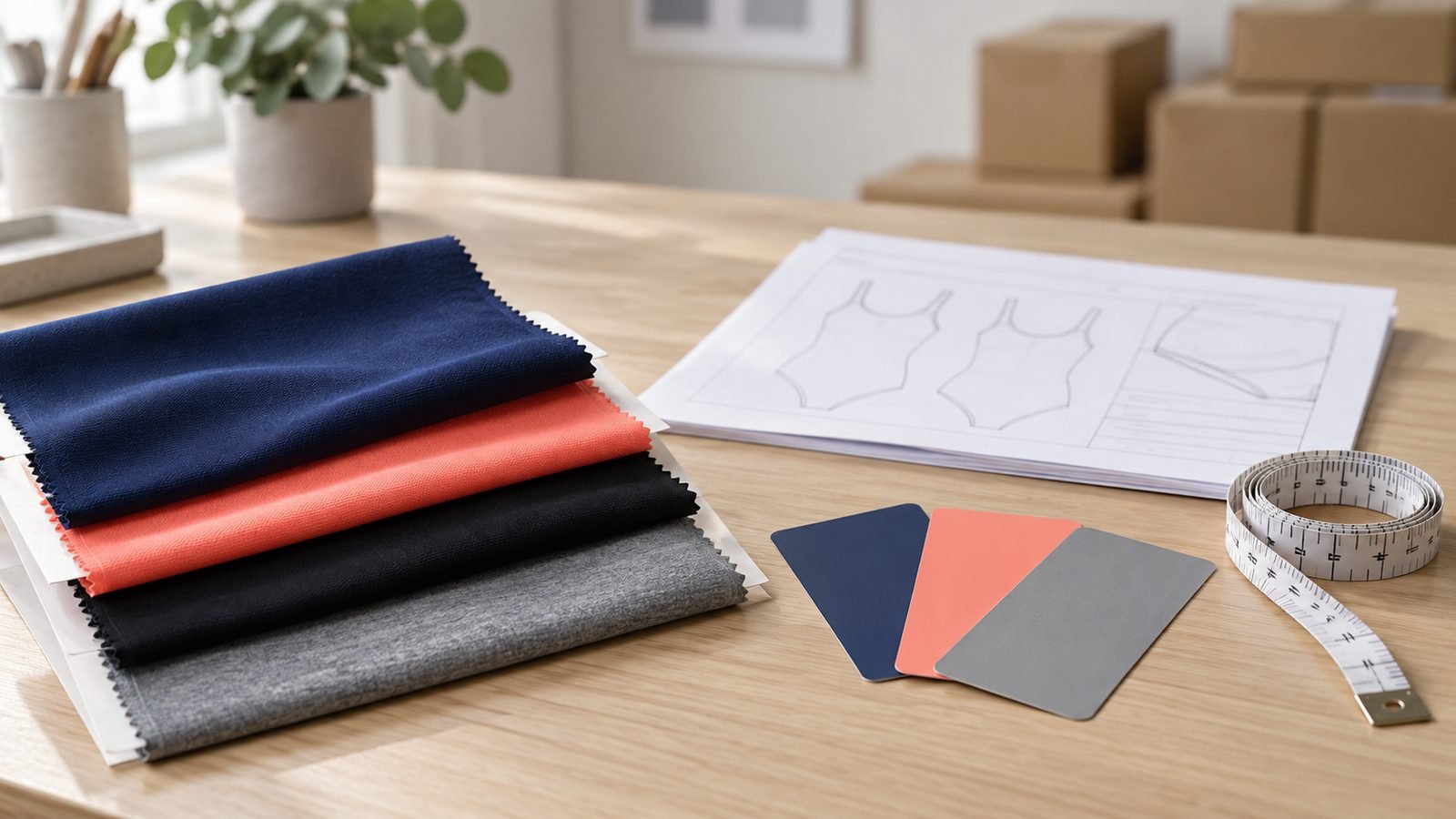
Three factories quote your first swimwear collection. One says 100 pieces per style, one says 300, one says a thousand. None of them is lying, and none of them is really answering your question. The number was set long before your order reached anyone’s cutting table, by fabric mills and dye houses upstream. Once you understand where it comes from, you can engineer it down, and the single biggest lever you control is fabric.
This guide breaks MOQ down by the three fabric routes every swimwear brand can choose from. In-stock fabric, custom-dyed fabric, and recycled or specialty fabric each carry their own minimums, timelines and trade-offs. Knowing them before you request a quote will save you weeks of back-and-forth, and very probably a development budget spent on the wrong route.
Where MOQ Actually Comes From
Start at the mill. Knitted swim fabric is produced in runs, and every run has a minimum expressed in kilograms or meters, per quality and per color. Your factory’s cutting floor then converts that fabric into pieces, which is why “our MOQ is 300” is usually just the mill’s minimum wearing a different unit.
Color adds the second layer. Custom shades are dyed in vats, every vat has a minimum load, and dyeing less than that minimum still costs the full vat. That is why the moment you insist on your exact Pantone, the per-style minimum climbs.
The third layer is quieter. Custom woven labels, branded elastics and molded cups all arrive with their own supplier minimums, and cutting efficiency (how many garments fit into one fabric marker) decides how much of the cloth you paid for actually becomes product. Every MOQ answer you will ever receive is some combination of these three constraints. Change the fabric route, and the answer changes with it.
In-Stock Fabric: The 100-Piece Path
In-stock (or “stock-supported”) fabric is material the factory already buys in volume for its running programs, usually proven nylon-spandex and polyester-spandex qualities in a standing color card. Because that fabric is already on the shelf or one reorder away, the mill and dye minimums are absorbed across many clients, and genuinely low minimums become possible. At Enjoy Apparel, this route draws on a library of 5,000+ fabrics, most of them with standing color cards ready to cut.
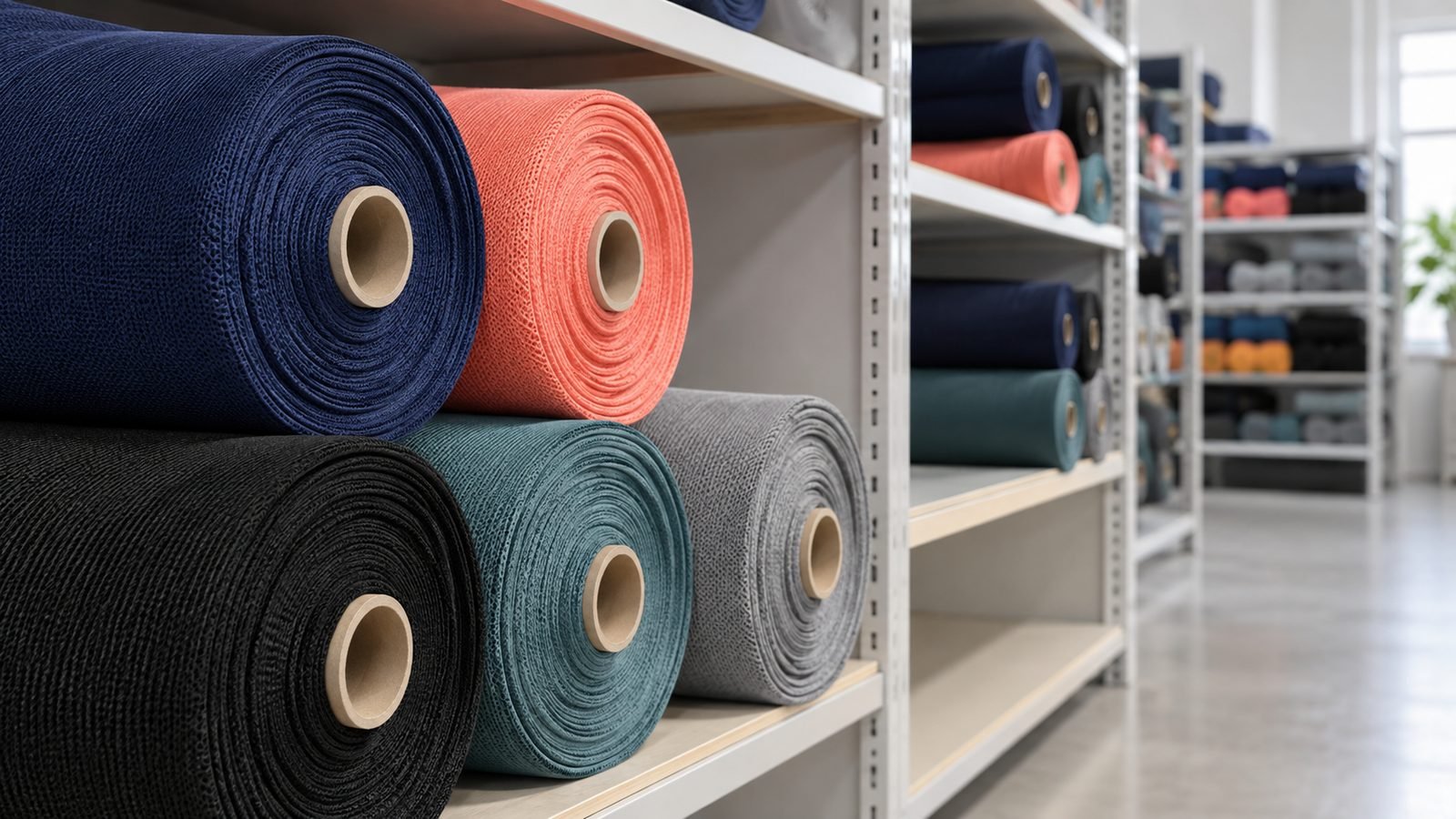
This is also the route behind our standard minimum. One hundred pieces per style, samples in 14–21 days, bulk production from around one month depending on the style. For a first collection, that means you can test three or four styles without committing your entire budget to inventory. When one of them sells, a reorder moves quickly, because the fabric pipeline already exists.
The trade-offs are real and worth weighing honestly. Your color choice is finite, since you pick from the stock card, and if your brand identity hangs on one exact Pantone, stock fabric may only get you close. You also share that palette with other brands, so your differentiation has to come from design, prints and trims rather than an exclusive base shade. For startups still validating a market, neither trade-off matters much. Speed and survivable risk matter, and this route offers both.
Custom-Dyed: Pantone Matching and Its MOQ Ladder
Custom dyeing gives you exact brand colors, and it rewrites the MOQ math completely. The process runs through lab dips, meaning small swatches dyed to match your Pantone reference, typically over two or three rounds of adjustment before approval. Custom-dyed projects therefore sit at the longer end of the normal 14–21 day sampling window. Build that into your calendar before you promise anyone a launch date.
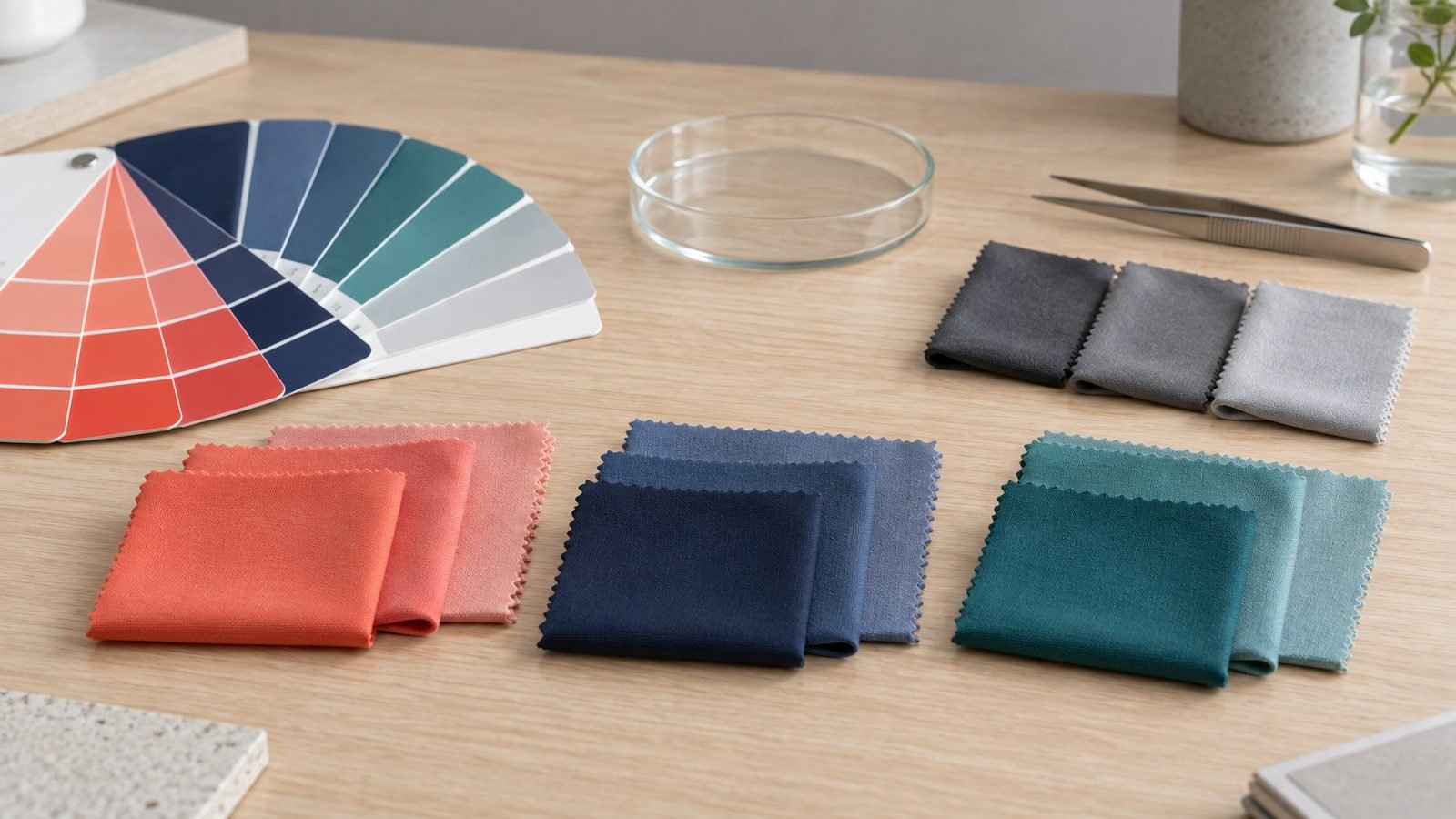
The ladder appears at bulk dyeing, because the vat minimum applies per color, not per style. Three custom colorways can mean three separate vat minimums even on the same fabric quality. And since the minimum is set in fabric weight, it can translate into several hundred pieces per color, depending on how much cloth each garment consumes.
Colorfastness and shade tolerance are the details worth insisting on here. Chlorinated pool water, salt water and sun cream are hostile environments for dyes, so specify testing to chlorine and seawater before bulk. A beautiful custom coral that bleeds after two pool sessions is a returns problem, not a brand asset. And agree on a lot-to-lot shade tolerance before you need it, especially if you plan reorders across a long season. “The same red” from two different dye lots is a negotiation unless you define it in advance.
Custom dyeing is the right route when color is core to your positioning and your volume per color can carry the vat minimum. Until then, it is a tax on being early.
Recycled and Specialty Fabrics: Higher Minimums, Real Differentiation
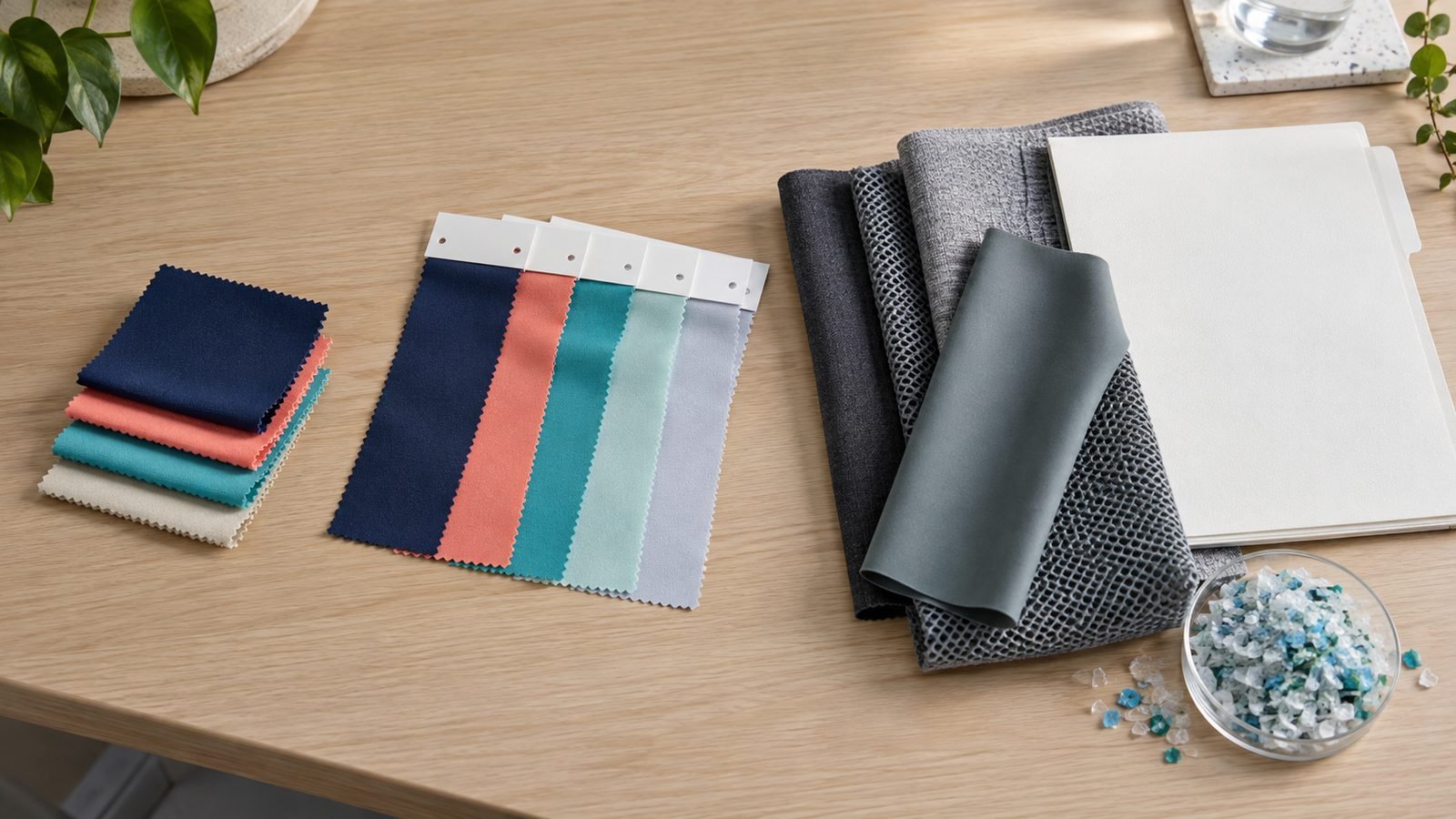
Recycled nylon and polyester swim qualities, including regenerated-nylon types and GRS-certified options, follow the same logic with one addition. Mill minimums run higher, because these fabrics are produced in smaller, more controlled batches. The same applies to specialty constructions like chlorine-resistant PBT.
Plan for minimums above your stock-fabric program. The standard workaround is combining several styles into one fabric quality so they meet the minimum together, and you should budget for a fabric premium per meter. What you get in return is a sustainability story that European buyers increasingly require rather than merely prefer.
The paperwork deserves a warning of its own. If you intend to print “recycled” on a hangtag, the claim needs a chain of custody. For GRS-certified fabric, ask for the transaction certificate that ties your fabric lot to the standard, and check what documentation your factory itself can show.
For reference, our own factory holds a BSCI audit and ISO 9001 certification, and we can supply OEKO-TEX® STANDARD 100 fabric documentation with orders on request. Without that paper trail, a sustainability claim is decoration, and decoration is getting riskier every year as the EU tightens enforcement of green claims.
Your First Order: Structure and Negotiation
Whatever route you choose, treat the first order as an experiment rather than a bet. In practice that means fewer styles in more colors. Two or three strong silhouettes in several colorways teach you which shapes sell, and color variety costs far less than style variety. Weight your size curve toward the middle and keep the tails shallow; your sell-through data will correct the curve on reorder.
Plan the reorder before you place the first order. A factory working from in-stock fabric can turn one around meaningfully faster than one starting from raw material. And keep one style deliberately simple, a clean single-fabric design that serves as your operational baseline while you experiment with more complex pieces.
As for negotiation, MOQ is negotiable, but rarely in the way buyers first try. Asking “can you do fifty?” is a request for the factory to lose money, and factories hear it every week. What actually moves the number is arriving with a credible plan. A target market, a launch date, a reorder intention. Factories flex for growth stories, not for small numbers.
This is also how most private label swimwear programs begin in practice. A small, well-planned first run on a proven pattern, with the brand’s own labels and packaging doing the differentiating.
Offering to absorb constraints works the same way. Stock colors instead of custom shades, an off-peak production slot, simpler trims. Every constraint you take on is minimum the factory can give back, and combining several styles into one shared fabric buy remains the single most effective lever of all. A deposit behind your commitment changes the risk calculation faster than any email.
Be suspicious, though, of any supplier who agrees to a number below a plausible cost floor. The difference will surface somewhere, usually in fabric substitutions, line priority or QC attention.
How We Handle Low-MOQ Programs at Enjoy Apparel
Enjoy Apparel is a swimwear and activewear OEM/ODM factory in Zhongshan, China, and low-MOQ development is one of the programs our clients use most. Alongside the fabric library, our ready-style catalog of 1,000+ proven base patterns lets new brands start from tested fits instead of a blank page. Tell us your budget and your timeline, and we will tell you plainly which fabric route fits, before you spend anything on development.
Bring us your collection plan. WhatsApp +852 9641 7199 or email admin@zsenjoyco.com, and you will get a route recommendation, not just a quote.
Frequently Asked Questions
Is MOQ calculated per style, per color, or per size?
Per style is the base unit; ours is 100 pieces. Custom-dyed colors add a per-color minimum from the dye house on top, while sizes within a style can usually be mixed freely along your size curve.
Can I mix different styles to reach the MOQ?
Mixing styles does not lower the per-style minimum, because each style carries its own pattern, marker and sewing-line setup. What mixing can do, at the fabric level, is let several styles in the same quality and color share one fabric minimum. That combination is one of the first things we help clients engineer.
How much do samples cost?
Sample cost depends on style complexity, fabric route and whether custom dyeing or new trims are involved. We quote sampling individually after reviewing your design, and we will always tell you which choices are driving the sample price.
Do reorders carry the same MOQ?
For in-stock fabric routes, reorders typically run at the same low minimum on a faster timeline, because patterns and markers already exist. Custom-dyed reorders depend on whether your color can be re-dyed within tolerance, another reason to agree lot-to-lot tolerance up front.

