


The light panel hums on, and the first roll of the morning goes up on the inspection machine. A worker feeds the fabric over the glowing surface and watches it travel past, face up, then face down. By the time that same fabric leaves the building it will be folded, bagged and sealed into cartons. This article walks the route in between, station by station, with photos from the floor of Enjoy Apparel, an OEM/ODM producer of swimwear and activewear based in Zhongshan, China.
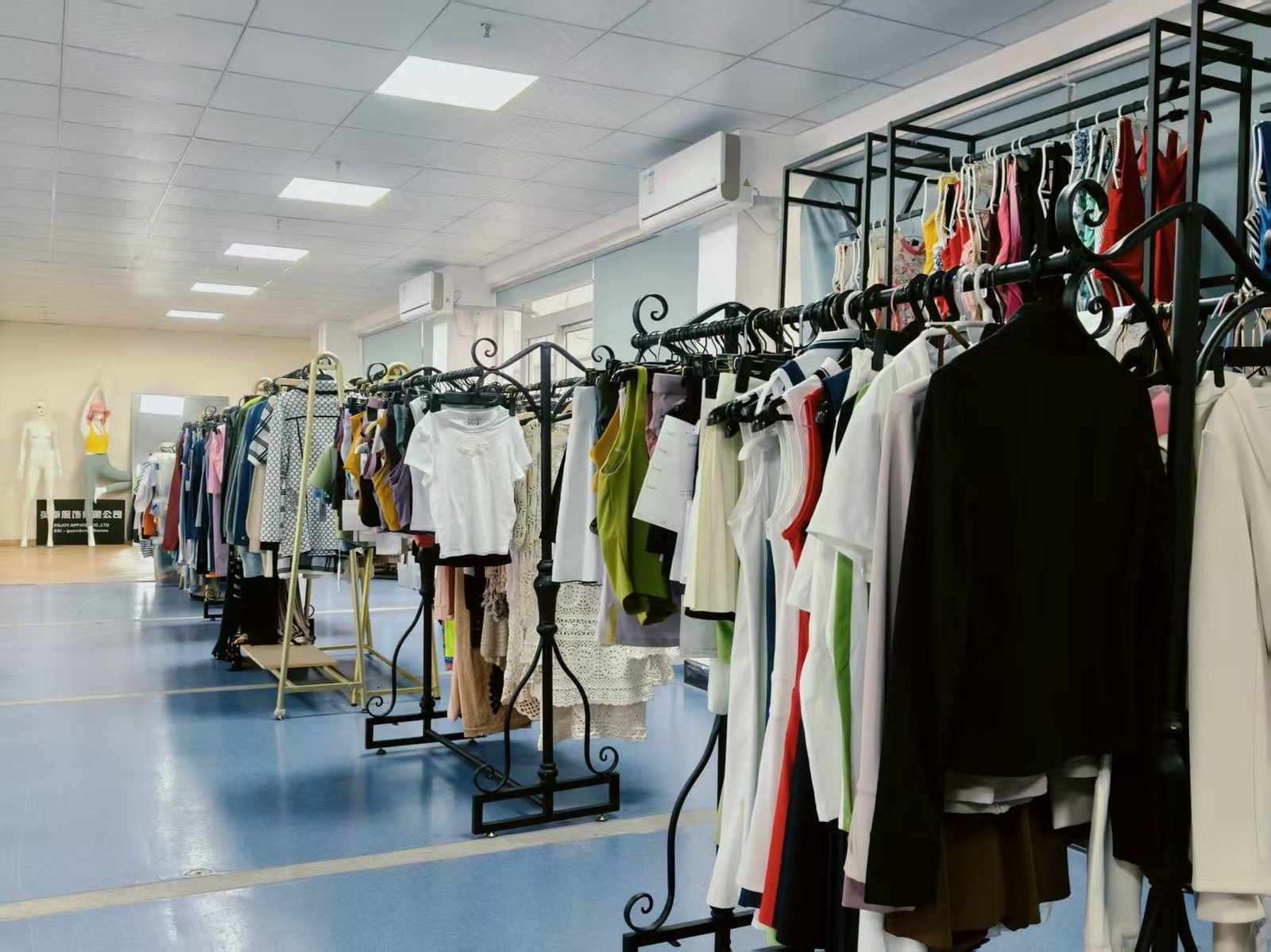
If you are vetting swimwear suppliers in China and wondering what really happens to your order after the deposit clears, this is the tour we would give you in person. The paperwork side of the same journey, from tech pack to freight booking, lives on our custom process page. Here we stay on the floor.
Fabric Inspection Comes Before Anything Gets Cut
Every roll that enters the factory is checked before it earns a place on the cutting table. The roll mounts onto an inspection machine, and the fabric travels slowly across a backlit panel while an inspector watches both faces. On swimwear knits, the usual suspects are pinholes, snags, oil spots, dye streaks and shading differences between the center of the roll and its edges.
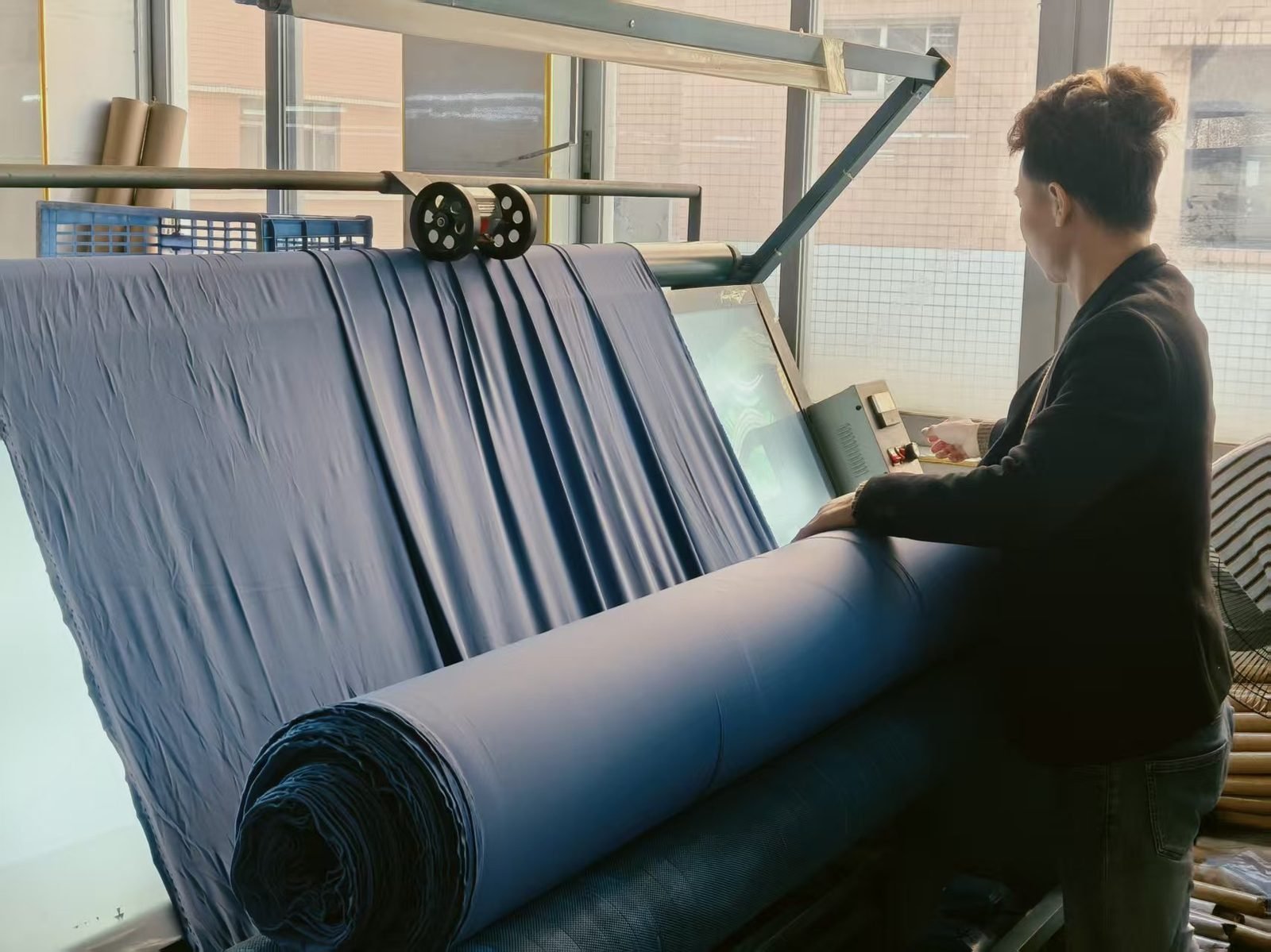
Strictness here is economics, not perfectionism. Fabric is the biggest material cost in a swimsuit, and a defective meter found after cutting cannot be returned to the mill. A flaw discovered at the sewing line has already absorbed cutting labor. Found at packing, it has absorbed everything. The cheapest place to catch bad fabric is before a single layer is spread.
Rolls are also measured for usable width and weighed against the specification, and stretch fabric gets time to relax off the roll so it measures honestly. Material that falls short goes back to the supplier, or the bad section is marked so the cutting layout can route around it.
Marker Making, Spreading and the Band Knife
Cutting starts on a computer, not a blade. The pattern pieces for every size in your order are arranged into a marker, a cutting layout that squeezes the most garments out of each meter of cloth. Marker efficiency decides how much of the fabric you paid for becomes swimwear rather than bin filler, and on knits it also fixes the direction of stretch in every finished piece.
The fabric is then spread into a stack of layers aligned to the marker’s length. Stretch fabric has to be spread relaxed, with no tension on the roll. A layer pulled tight across the table springs back after the cut, and every piece taken from it finishes small, which is one of the quiet ways a size chart stops meaning anything.
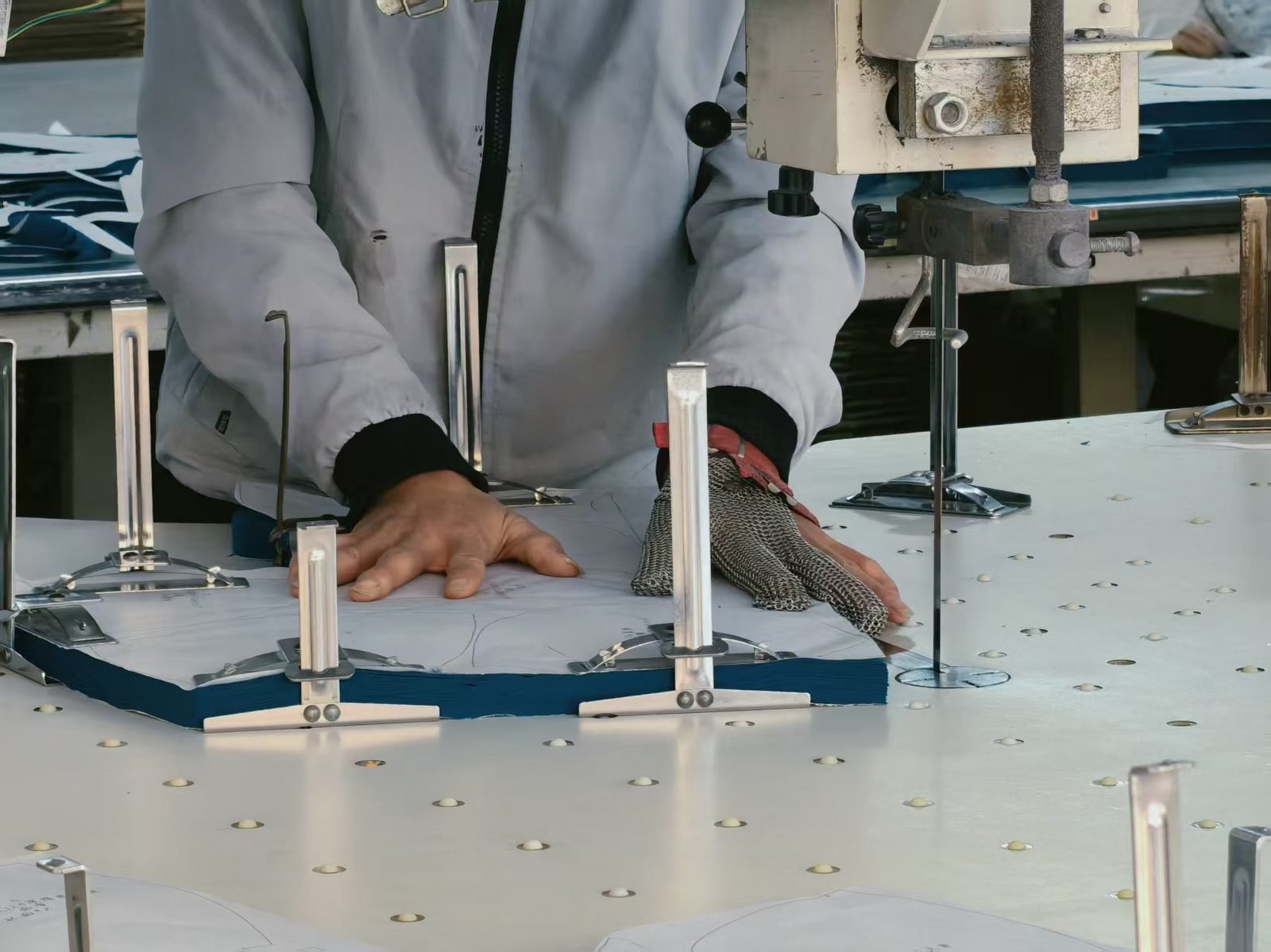
The stack is cut as a single block on a band knife machine, its continuous vertical blade following the marker lines through every ply at once. Drift of a few millimeters at the top of the stack becomes a real size inconsistency at the bottom, so the operator works slowly around curves, and notches are cut so the sewing line can match panels later. Cut pieces are bundled by size and counted, and the line receives complete kits.
Sewing Stretch Fabric Without Fighting It
Ask sewing veterans what is hard about swimwear and the answer is the fabric itself. A nylon-spandex knit stretches in every direction, and the seam has to stretch just as far without popping a stitch. Pull the fabric as it feeds and the seam puckers into ridges. Guide it too loosely and it gaps. Even stitching on stretch is a three-way balance of machine tension, stitch density and hand pressure.
The machines reflect the problem. Structural seams run on four-thread overlock machines that join and trim the edge in one pass, leaving a seam with built-in stretch. Hems that must lie flat against skin are coverstitched, elastic goes in with a zigzag that can stretch and recover, and stress points like the base of a strap get reinforcing bartacks. The close-up below shows an industrial machine at work, the kind of heavy-duty equipment you will find on most serious swimwear floors.
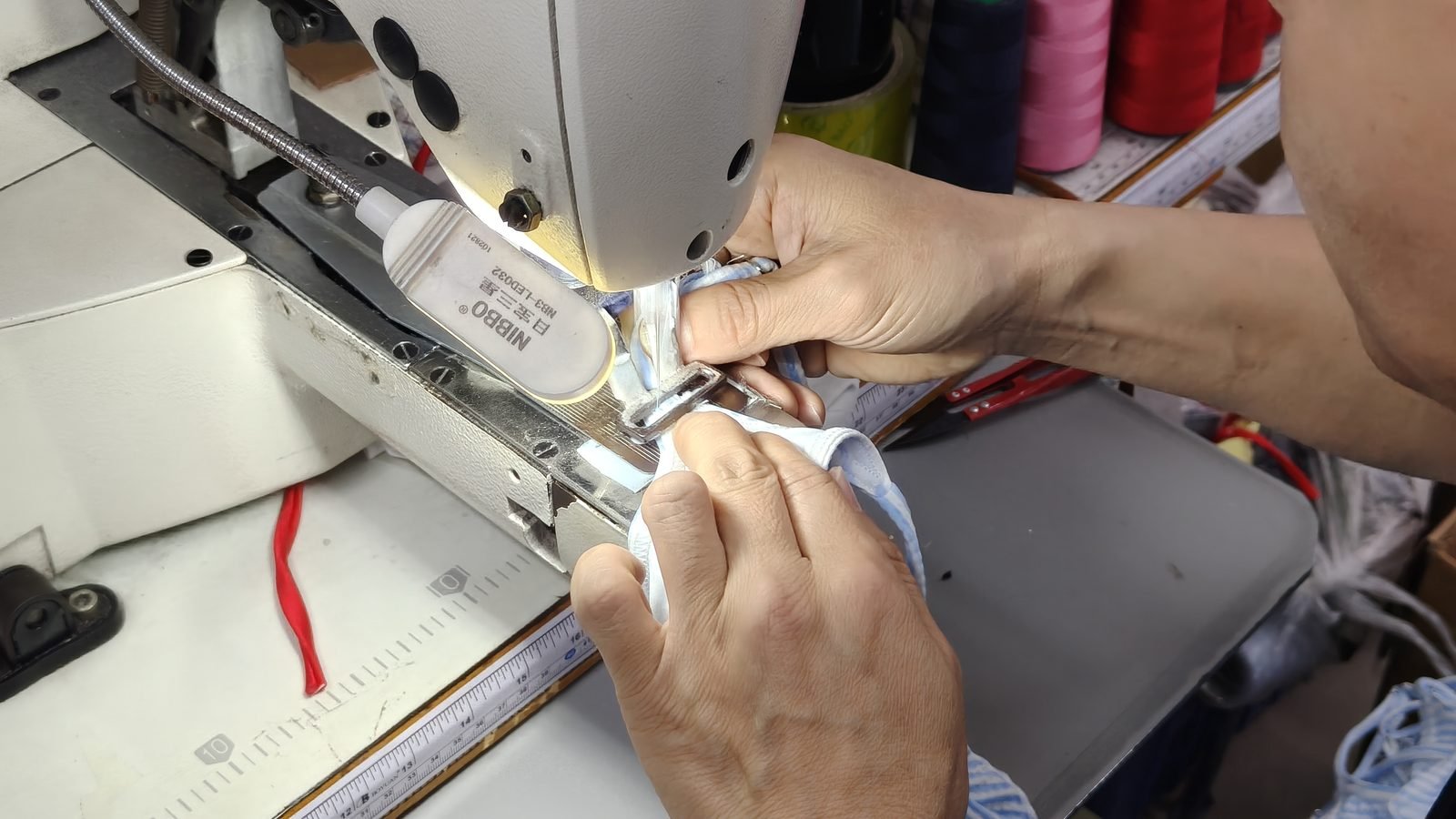
Machine badges matter less than what the operator’s hands are doing. Feeding two stretch layers through evenly, keeping elastic tension consistent so a leg opening hugs without digging in, pivoting around a curve with the needle down. Skipped stitches are the classic swimwear defect, usually a sign of a wrong or worn needle, and they are exactly what the finishing check looks for afterward.
The Finishing Touches That Set the Shape
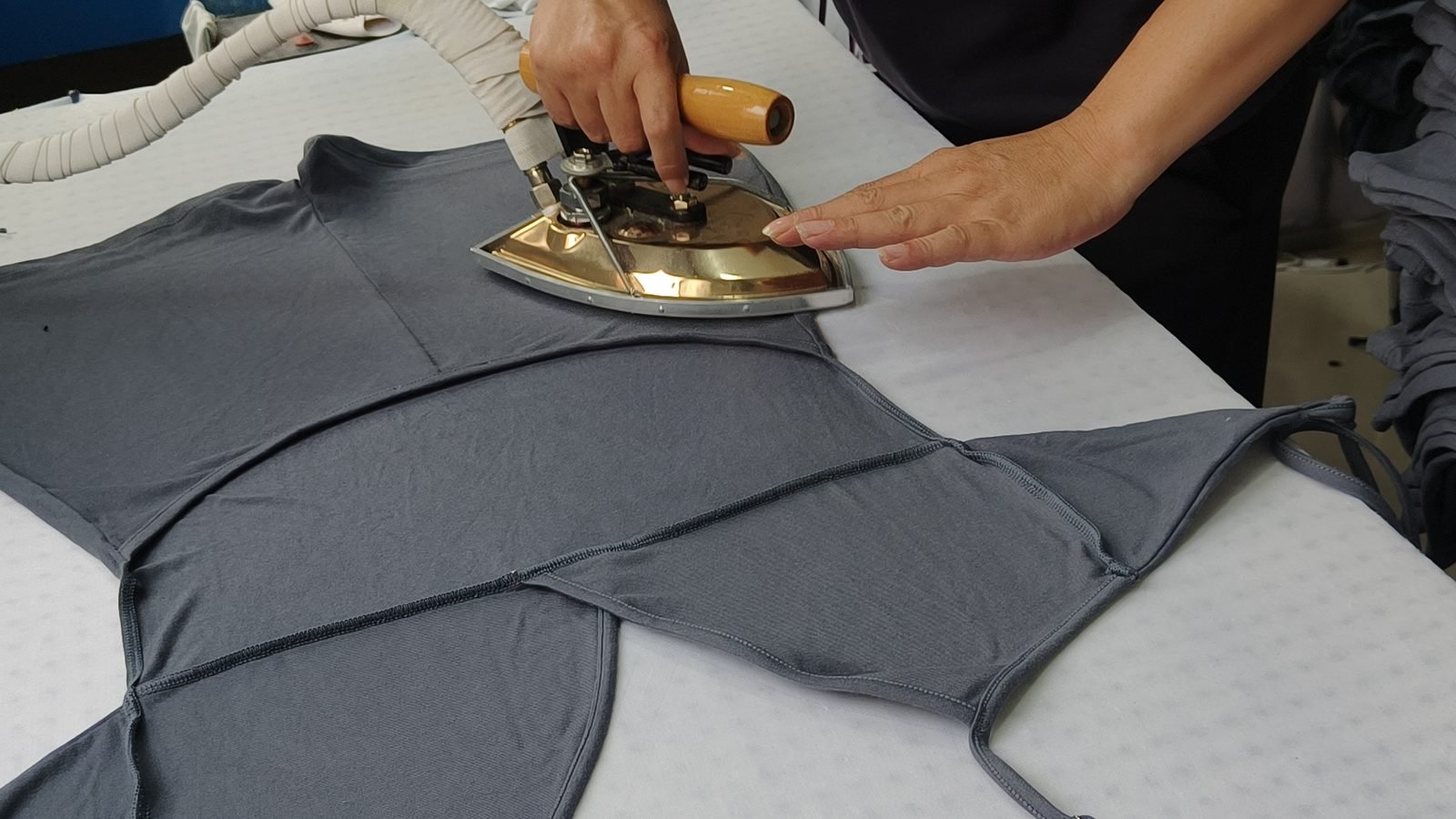
A swimsuit that leaves the sewing line is assembled, not finished. Loose thread ends are snipped by hand, seams get a visual pass, and then the garment meets steam. Pressing swimwear is a lighter discipline than pressing cotton, because spandex degrades under high heat. The goal is a gentle steaming that releases handling creases and sets the intended shape, never a hard iron that would cook the recovery out of the fabric.
Measurements get verified at this station too. Bust, waist, hip and strap length are checked against the specification, first flat and then under light stretch where it matters, because a swimsuit does its job stretched. A suit that measures correctly on the table but not on the body is still a wrong suit, and this is where it gets caught.
Packing Is the Last Checkpoint
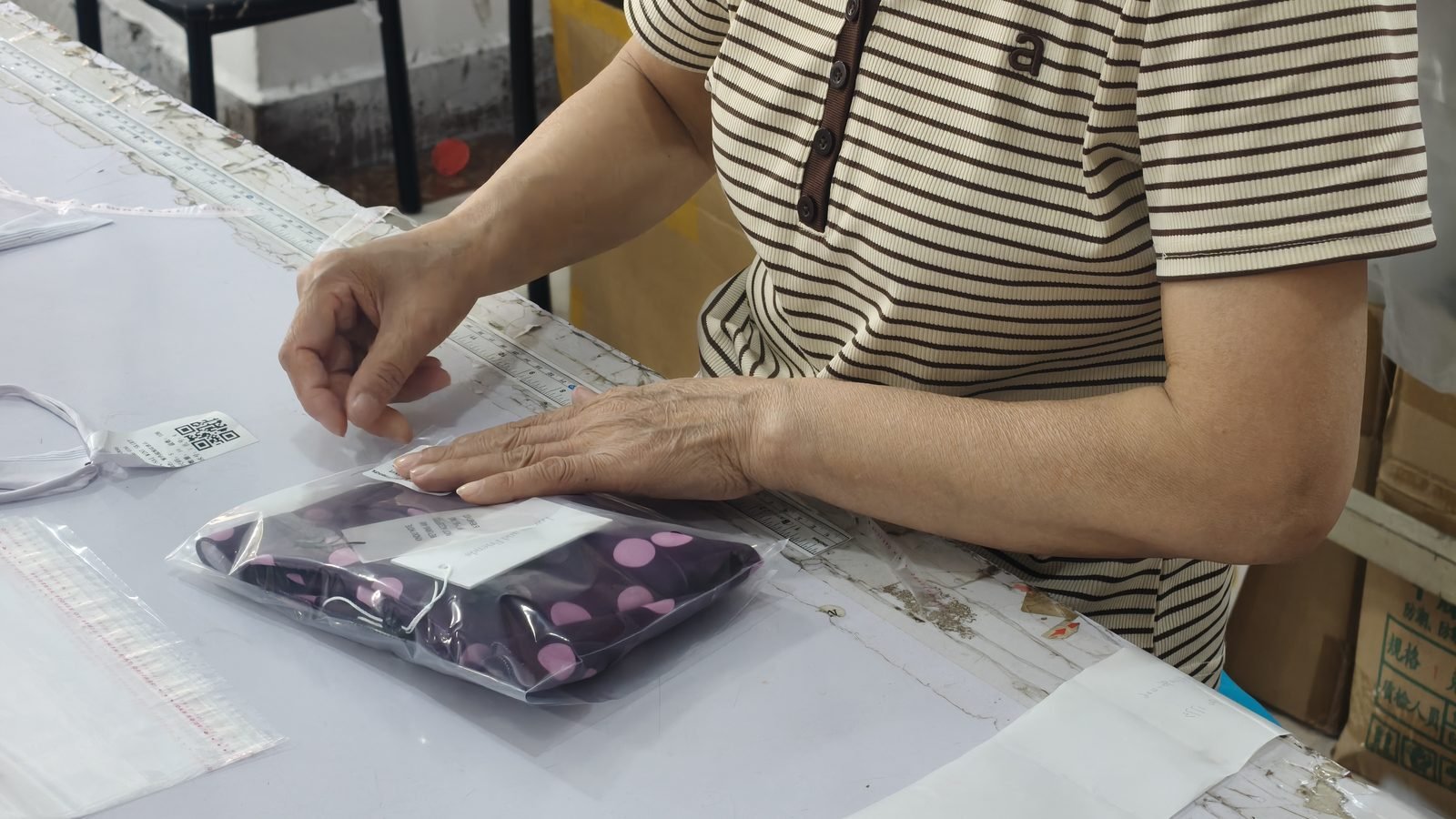
Packing sounds like logistics and behaves like inspection. Each suit is folded, looked over one last time for stains and open seams, matched with its hangtag and care label, then sealed into a polybag with a size sticker. Cartons are packed to your size ratio, their markings are what your warehouse will live by, and quantities are counted twice before the tape goes on.
This is the final moment anyone can still fix a mistake cheaply. A stain missed at sewing, a hangtag paired with the wrong size, a carton count off by a handful. The same checkpoint mindset runs the entire route from the light panel onward, and the same checkpoints are what we walk visiting buyers through, station by station. Buyers who visit in person tend to linger here, because packing is where every upstream shortcut surfaces.
What to Look at in Any Factory You Visit
At Enjoy Apparel, this is the path every order takes, from a first small run to a repeat seasonal program. You can use the same walkthrough as an audit script at any swimwear factory, ours included. Brochures describe intentions; a production floor shows habits. Whether you visit in person or tour by video call, these are the stops that tell you the most.
- Ask to see where fabric is inspected before cutting, because a factory that skips this station will find its fabric defects inside your finished goods.
- On the cutting table, check whether the fabric lies relaxed or pulled tight, since tension on the table becomes size drift in the carton.
- At the sewing line, watch the operators’ hands instead of the machines, because even stretch seams come from easing fabric through rather than tugging it.
- Turn a finished garment inside out and read the seams, looking for dense, even stitching and thread ends that have actually been trimmed.
- Ask whether finished garments pass through a needle detector before packing, which matters most when the order includes children’s swimwear.
- Notice whether you may walk the whole floor or only a prepared route, since open access is the clearest signal a factory can send.
Everything above is the honest version of our own floor, and the same walk works live. If you are comparing factories and want to watch these stations while the line is running, message us on WhatsApp at +852 9641 7199 and we will set up a video tour from the inspection machine to the packing table.
Frequently Asked Questions
Can I visit the factory in person?
Yes, and we encourage it. We host brand founders, designers and QC teams at our factory in Shaxi Town, Zhongshan, part of China’s knitwear manufacturing belt in Guangdong. Reach out a couple of weeks ahead with the styles you care about, and we will plan the visit so the line is running something relevant while you are here.
Do you do live video tours?
Yes. For most overseas buyers a video call is the practical first step before booking flights. We walk the camera through the same route this article follows while the line is working, and you can ask us to stop anywhere, hold a seam up to the lens or show a station twice. Message us on WhatsApp and we will agree on a time that suits your time zone.
How long does it take from fabric confirmation to shipment?
Once your fabric, trims and artwork are locked in, sampling runs 14–21 days. Bulk production starts after you approve the sample and takes a month at minimum, with the schedule set by the style and the season. Transit time then depends on the shipping method and destination you choose.
What is your minimum order quantity?
Minimums begin at 100 pieces per style, and the exact figure depends on the style and fabric you choose. If you are launching a first collection, starting from proven ready styles keeps both the minimum and the development risk low.

