


Modest swimwear has moved from a niche request to one of the fastest-growing corners of the global swim market. Brands serving customers from Dubai to London to Southeast Asia are launching full-coverage lines, and many of them discover the same problem the hard way. Most swimwear factories built their pattern rooms around bikinis and brief one-pieces.
A modest line is as much an engineering brief as a design brief, and the factories that understand this deliver a very different product from the ones that simply “add sleeves.” This guide is written for brand founders, product developers and wholesale buyers planning a modest line. It walks through the three things you need to specify before you ask any manufacturer for a quote (coverage, fabric, and construction), plus the market details that separate a line that sells from a line that gets returned.
What “Modest” Means in Product Terms
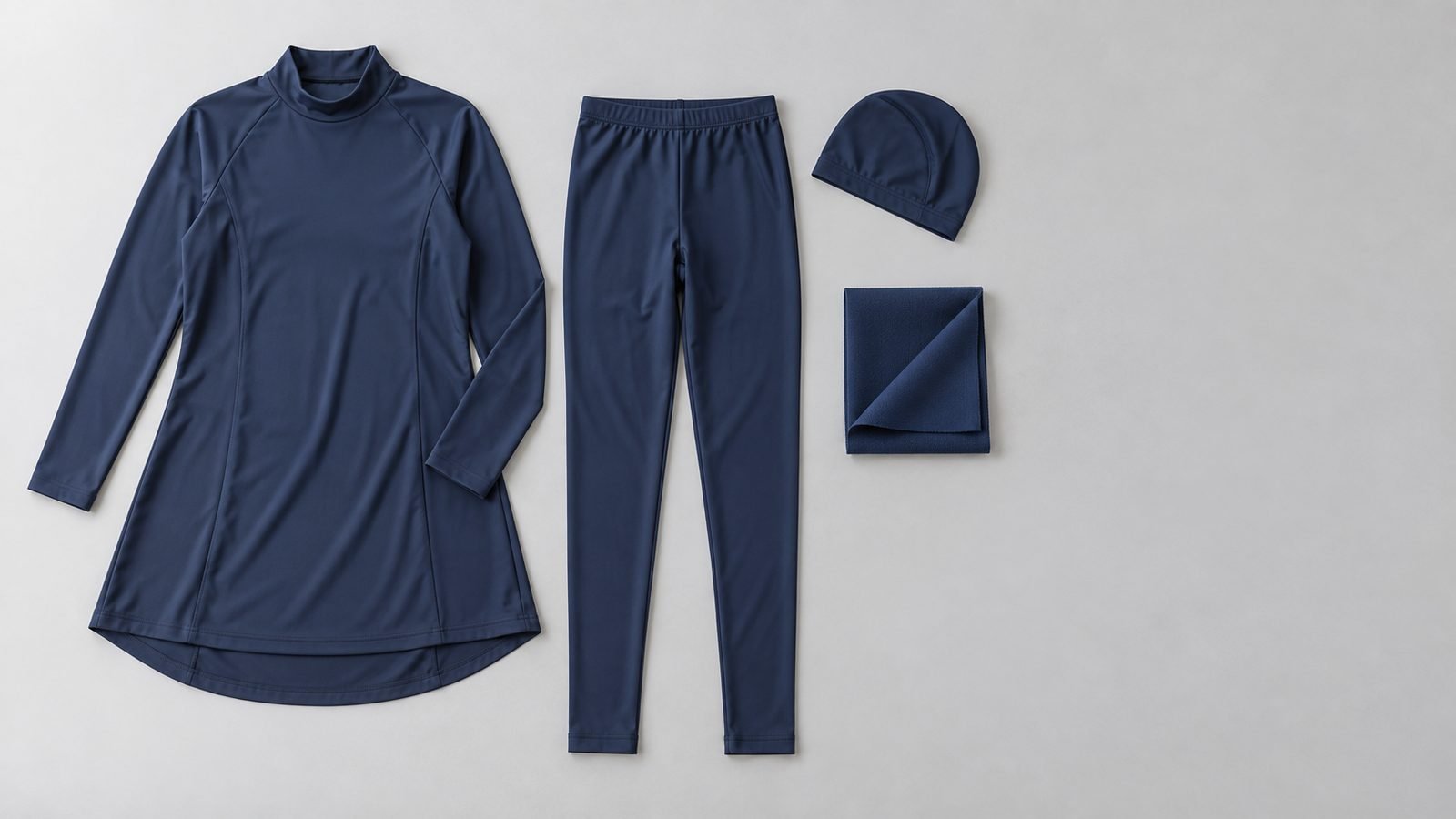
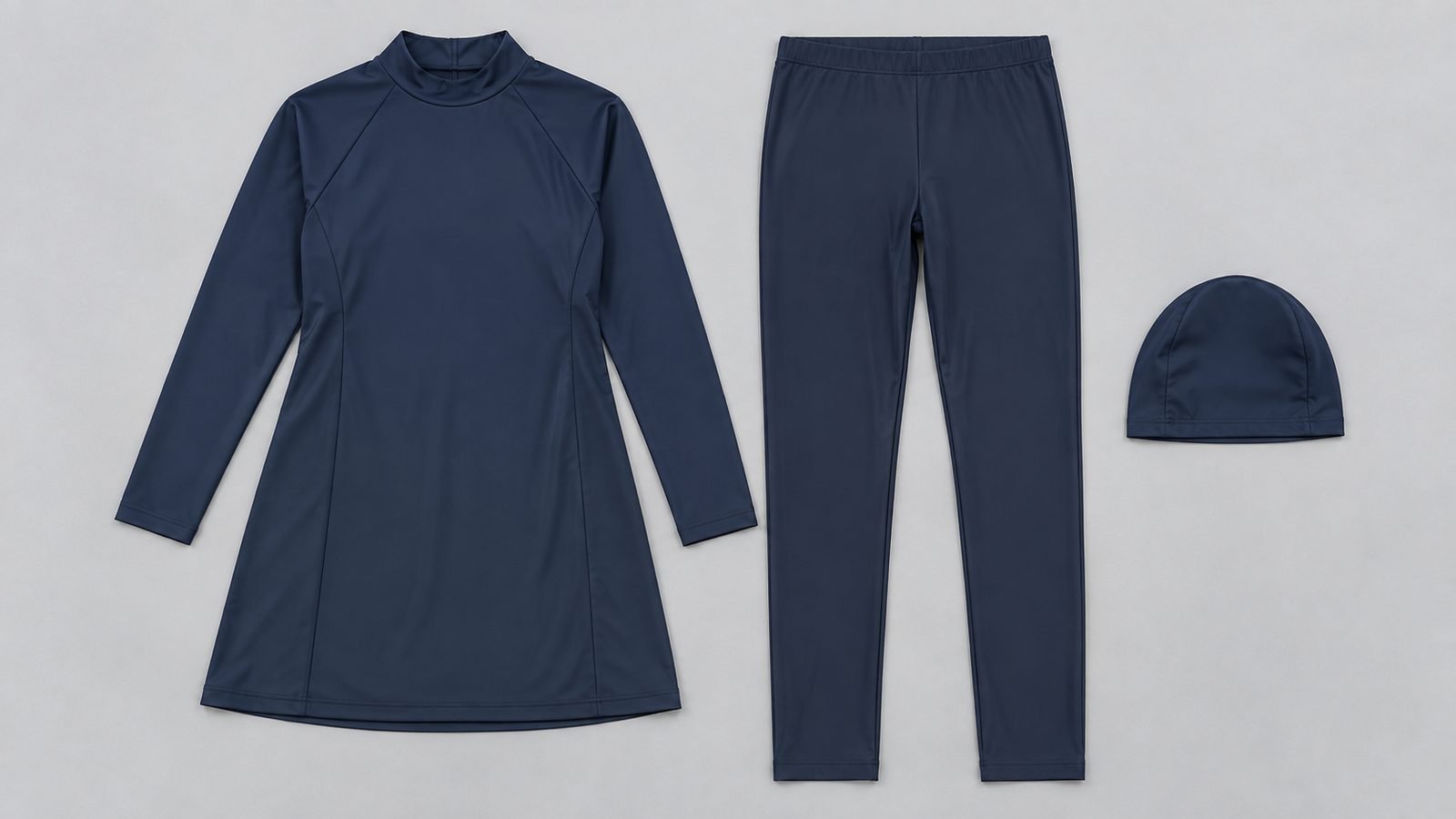
“Modest” is a marketing word. Your tech pack needs measurements. The burkini set, a tunic over swim pants often with a matching cap, sits at one end of the spectrum with a high crew or mock neckline, full-length sleeves, a tunic cut to mid-thigh or knee, and full-length pants. It is the silhouette Gulf customers ask for most. The swim dress softens the same idea into an A-line skirt over an attached brief, which is why it performs so well with resort customers and plus-size ranges.
The long-sleeve one-piece keeps coverage high while staying close to the body, and it has become the default for buyers who want modest styling with real athletic credibility. A rash guard paired with swim leggings turns coverage into a mix-and-match program, with the bonus of a sun-protection story.
Whichever silhouette you choose, settle two decisions before you talk to a factory. Fit intent comes first. Modest does not mean loose everywhere, and a relaxed tunic over fitted pants behaves very differently in the water than a compression-fit one-piece. Then express coverage in centimeters on a base size and grade from there, because “long enough” means something different to every pattern maker who reads it.
Fabric Requirements: Opacity Comes First
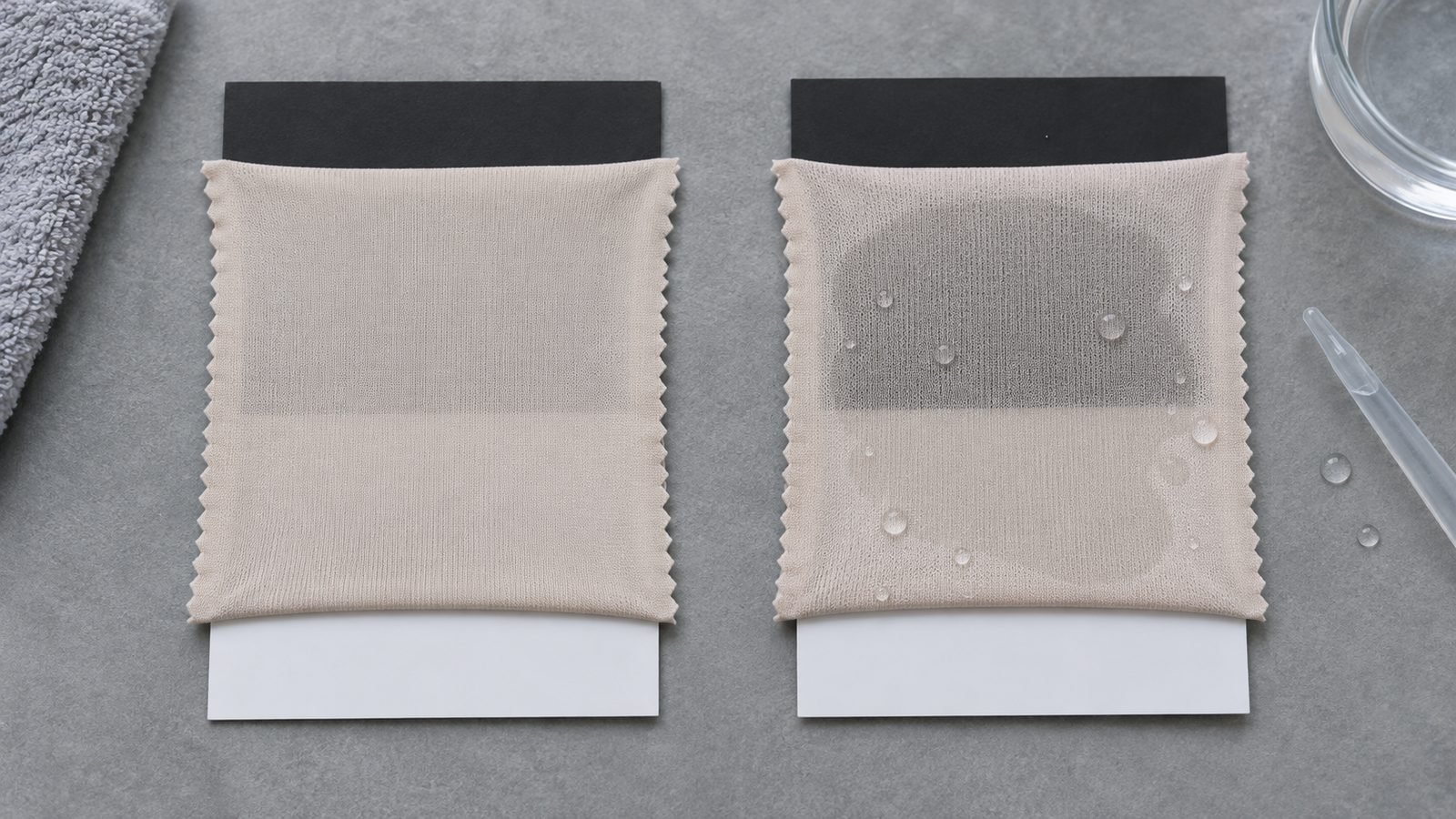
Ask any swimwear technician where modest lines fail, and the answer comes back the same every time. Transparency. A fabric that looks perfectly opaque on the table can turn see-through in the water, because wet fabric stretches tighter against the body and light colors lose opacity when saturated. Fabric selection for modest swimwear therefore starts with opacity, not hand feel.
The working spec we recommend is a main body fabric in the 200–220 gsm range, noticeably heavier than the 180–190 gsm common in fashion swimwear, knitted from roughly 80/20 nylon-spandex with genuine four-way stretch. The extra weight buys both opacity and the more structured drape that flatters relaxed silhouettes.
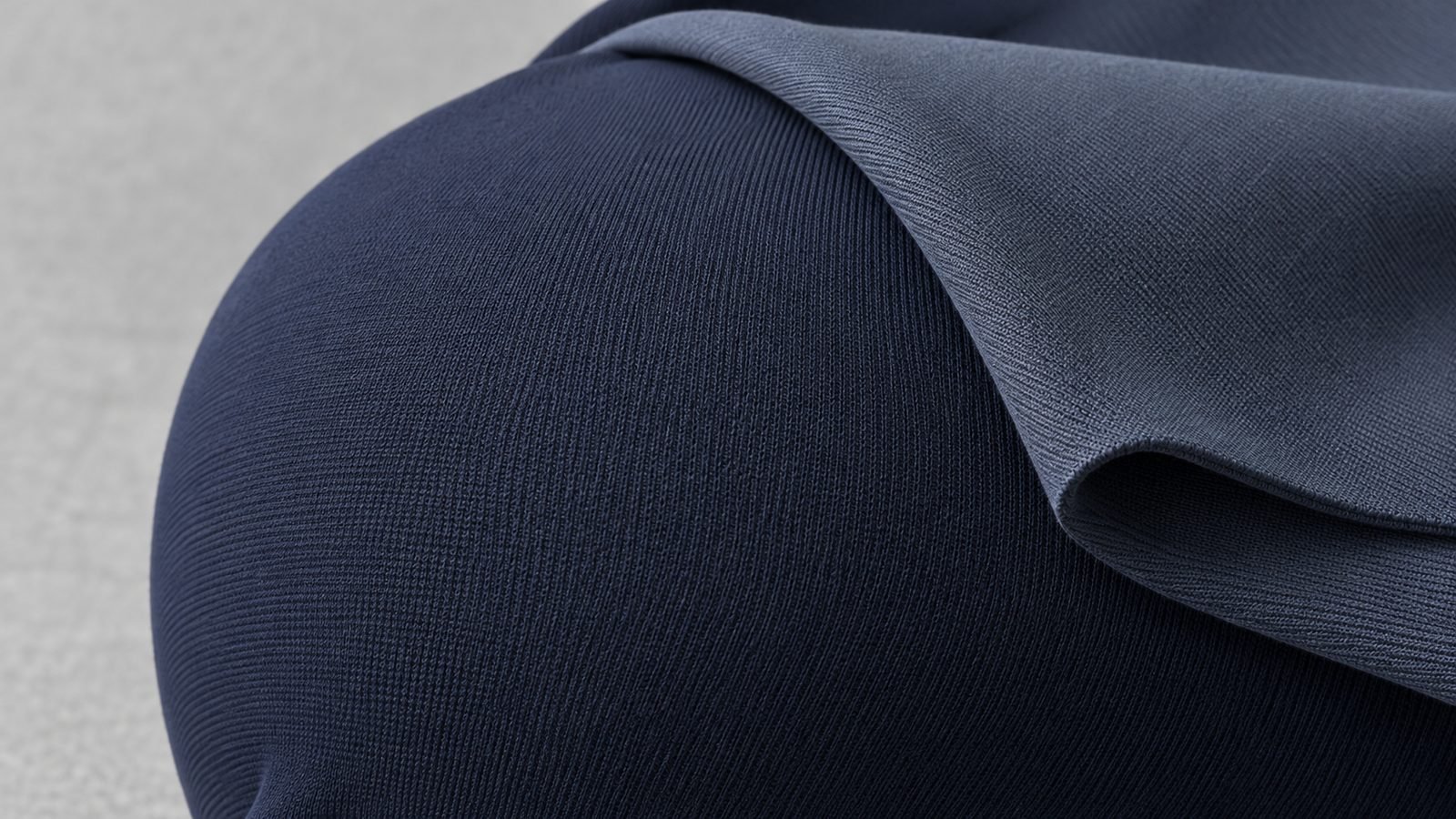
Finish matters too. A matte surface reads more covered than a shiny one, which tends to highlight every contour. And for light colorways, a double-layer front panel and a lined gusset solve opacity more cheaply than upgrading the whole garment to a heavier quality.
Where your customer swims decides two more choices. In Gulf markets, hotel and community pools are a major use case, and standard spandex degrades fast in chlorinated water. A chlorine-resistant polyester/PBT blend is the right answer there. And since modest swimwear covers more skin by design, a UPF 50+ rated fabric lets you turn coverage into a functional sun-protection feature rather than an apology.
Stretch is only half the story. Recovery, the fabric’s ability to snap back, is what keeps knees and elbows from bagging after the first swim. A modest silhouette with bagged knees loses exactly the clean line the customer bought it for. Test both, and test after washing, not just off the roll.
Construction Details That Make or Break the Line
Modest swimwear lives or dies on details that barely matter in a bikini. More fabric means more seam contact with skin, so flatlock seams, which lie flat instead of ridging, are the difference between a garment worn for laps and one worn once and returned.
Ride-up is the other classic failure. A tunic that floats upward or leggings that slide down defeat the entire product, which is why experienced factories build silicone gripper elastic into hems and a drawcord into the waist of swim pants.
Bust support needs a modesty-first answer too, usually removable cups or a shelf bra with an opaque lining. If the style closes with a front zip, specify a modesty panel behind it and a zip garage at the collar so nothing pinches or gapes.
Then there is the hijab question. Attached hood, detachable cap, or no headpiece at all? Detachable caps with a simple snap system give your customer flexibility and give you simpler inventory. Either way, the cap should be cut from the lightest, fastest-drying fabric in the set, because a heavy wet hood is miserable.
Finally, remember water weight. A knee-length tunic carries real weight when the wearer climbs out of the pool. Whether the hem snaps back or stretches out forever is decided by your fabric recovery and hem construction, not by luck.
Sizing and Fit for Modest Lines
Relaxed-fit swimwear grades differently from compression swimwear. If your factory grades a modest tunic the way they grade a bikini, the largest sizes will pull at the bust while the smallest swim in fabric. Ask for a dedicated grading rule for relaxed styles, and confirm which market’s size chart you are building to. Gulf, US and EU expectations are not the same, and modest swimwear has heavy overlap with plus-size demand.
Then insist on a wet fit check. A modest style that fits beautifully on the table can lift, pull or balloon in the water, and that is exactly the moment your customer will judge it.
Middle East Market Notes
For brands targeting the Gulf and the wider Middle East, the product is only half the brief. Prints and motifs deserve a cultural review before sampling, because what reads as abstract in one market can read very differently in another. Presentation should match the positioning of the product, down to photography styling, packaging and even hangtag imagery. Arabic care labels are a small cost and a meaningful signal of seriousness.
And plan your calendar backwards from the region’s selling season. Resort retail in the Gulf runs on a different rhythm than the Western summer, and sampling slots fill up fast ahead of it.
The Mistakes That Sink Modest Lines
The failures we see most are rarely exotic. The first is briefing coverage and nothing else. “Long sleeves, long legs” is a silhouette, not a product, and brands that skip the fabric and construction spec end up approving a sample that photographs well and fails in the pool. The second is approving opacity on a dry swatch, still the single most expensive mistake in this category. Bulk fabric that fails the wet test is not a defect you can negotiate away; it is a container of unsellable inventory.
Right behind those come choosing stretch without recovery, then a presentation that contradicts the product, and finally treating the cultural review of prints as optional until the first complaints arrive. None of these require genius to avoid. They require a checklist and a factory that has made the mistakes before you.
How We Build Modest Lines at Enjoy Apparel
Modest swimwear is one of the programs we run for Middle East buyers at Enjoy Apparel, our swimwear and activewear factory in Zhongshan, China. Because coverage and opacity are the hard parts, we start modest projects from the fabric side. Our fabric library of 5,000+ qualities includes 200–220 gsm four-way-stretch options, chlorine-resistant PBT, UPF-rated and recycled alternatives, and OEKO-TEX® STANDARD 100 certified fabrics are available on request, which matters for brands selling into Europe and the Gulf.
Our pattern team develops custom coverage patterns, from tunics to detachable caps to swim leggings, as a standard ODM service. Development minimums start at 100 pieces per style, with samples in your hands in 14–21 days and bulk production from around a month, depending on style.
If you are planning a modest line, send us your coverage spec or even a reference garment, and we will come back with a fabric recommendation and a development plan. The fastest way to start is a WhatsApp message to +852 9641 7199. If you prefer email, write to admin@zsenjoyco.com.
Frequently Asked Questions
What is the MOQ for a custom modest swimwear line?
Our minimum is 100 pieces per style, with the exact requirement depending on fabric and color choices. Starting from in-stock fabrics keeps minimums at their lowest; custom-dyed colors and specialty fabrics raise them.
Can you develop custom coverage patterns, such as a knee-length tunic with an attached hood?
Yes. Custom coverage patterns are a standard part of our ODM service. You can supply a tech pack, a reference garment, or even a sketch, and our pattern team converts it into production-ready patterns. Exclusive design agreements are available to protect your styles.
Which fabrics do you recommend for modest swimwear?
For most styles, a 200–220 gsm nylon-spandex with four-way stretch and strong recovery, in a matte finish. For pool-heavy use, a chlorine-resistant polyester/PBT blend. For sun-protection positioning, UPF 50+ rated fabric. We confirm the final quality against your price point and use case before sampling.
How long do sampling and production take?
Samples take 14–21 days after fabric, trims and artwork are confirmed. Bulk production takes at least one month, scheduled by style complexity and order quantity.

