


A padded bikini top comes off a production line with the cup sitting a centimeter off center. On a cutting table, that looks like a small deviation. On a customer in front of a fitting room mirror, it looks like a brand that never checked its own product. She returns the top, leaves a one-star review, and the money you spent acquiring her leaves with it.
If you have ever opened a bulk shipment and found skipped stitches, sizes that fit differently from the approved sample, or loose threads still hanging off the leg openings, you know how that story ends. The direct costs are refunds and replacements. The larger costs are the reviews that stay up after the refund is issued. If you are evaluating factories right now, quality control is the thing you most need to see in action and least want to hear described with the word strict.
Here is how a swimwear order actually gets inspected before it ships, stage by stage, with photos from our own floor in Zhongshan, China. It is written for brand owners who have been burned once and do not intend to repeat the experience.
Quality control starts before the sewing line
Fabric and trims get checked when they arrive, not after they are cut. Incoming fabric is reviewed for weight, stretch and recovery, shade against the approved lab dip, and surface defects such as snags or oil stains. Most serious swimwear factories run some version of this step. What varies is how much of each roll actually gets examined before it goes to the cutting table.
Recovery matters more than most buyers expect. Swimwear fabric is stretched hard in wear and in washing, and if it does not return to its original dimensions, no careful sewing will rescue the fit. Catching a weak roll at the door costs a conversation with the mill. Catching it after cutting costs an order.
Trims get the same treatment. Elastics, rings and sliders, cups, sewing thread, and labels are compared against the approved sample, because a cup molded to the wrong thickness changes the garment as surely as a wrong pattern. For brands selling into markets where chemical safety documentation matters, we can source OEKO-TEX® STANDARD 100 certified fabric for the order, which moves that part of compliance upstream to the fabric itself.
In-line checks while the order is being sewn
Final inspection catches problems. In-line checks keep them from multiplying. When a new style or a new size starts on a line, the first pieces are compared against the approved sample before production continues, which typically catches pattern or tension issues while they have affected a handful of pieces rather than a full size run.
Swimwear adds its own complication. The fabric is sewn under stretch, so seam quality is judged partly by what happens after the stress is released. Inspectors stretch seams by hand to check for popped or skipped stitches on elasticated edges, and they watch for the rippling that shows up when an operator feeds fabric unevenly through the machine.
Sizing also drifts during a shift. Two operators pulling the same fabric with slightly different tension will produce measurably different garments, so in-line checks re-measure pieces against the spec sheet during the run, not only at the start. This is where consistency across an order is really decided.
The goal of all this is boring uniformity. When in-line checks work, final inspection becomes confirmation rather than discovery.
The measurement check
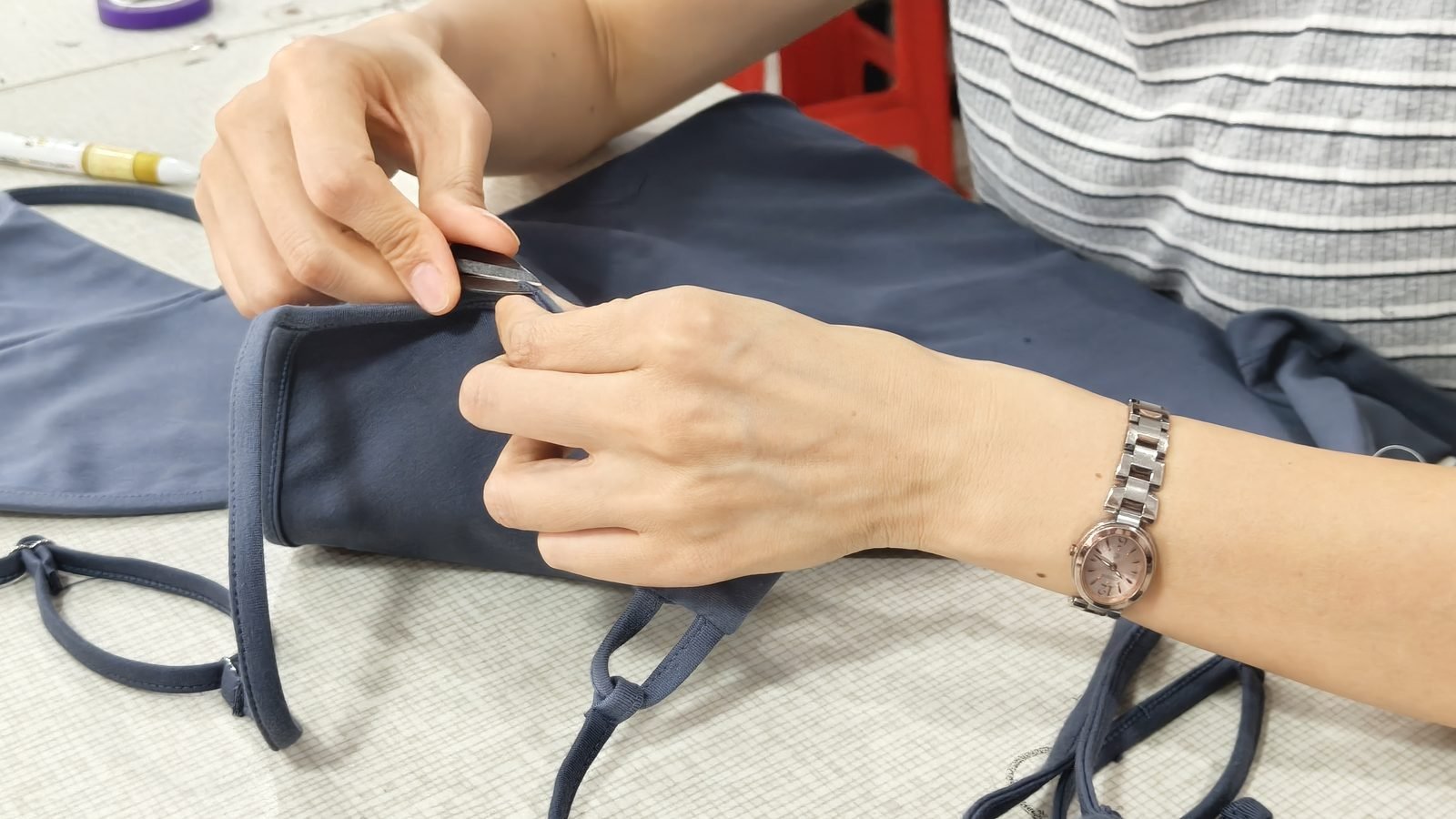
Before packing, finished pieces are laid flat and measured against the size spec sheet that was approved at sampling. On swimwear, the critical points are usually bust, waist, hip, body length, and strap length, with bottoms checked at the waist and along the leg. A garment that fails measurement does not go back on the pile.
Knit swimwear keeps moving after it is sewn. A piece measured straight off the machine reads differently once the fabric has relaxed, so garments rest before they are measured for the record. Skipping that rest is how a size that passed at the line ends up fitting small in the fitting room.
No handmade garment measures exactly to spec, which is why tolerance is a conversation rather than a surprise. The agreed tolerance defines what passes. A centimeter of variance at the bust of a medium may sit inside it. A centimeter of offset in cup placement almost never does, because the customer can see it. Tolerances are agreed per style before bulk production begins.
This stage is also where inspection photos come from when a buyer asks for them. We can walk you through these final checks on a call before you commit.
The details your customers actually see
Measurement errors show up in reviews as “runs small.” The next group of checks shows up as photographs in one-star reviews. None of these details affects how a swimsuit performs in the water. All of them tell the customer how much care went into making it, and finishing work is the first casualty when a factory falls behind schedule.
Loose threads get trimmed by hand
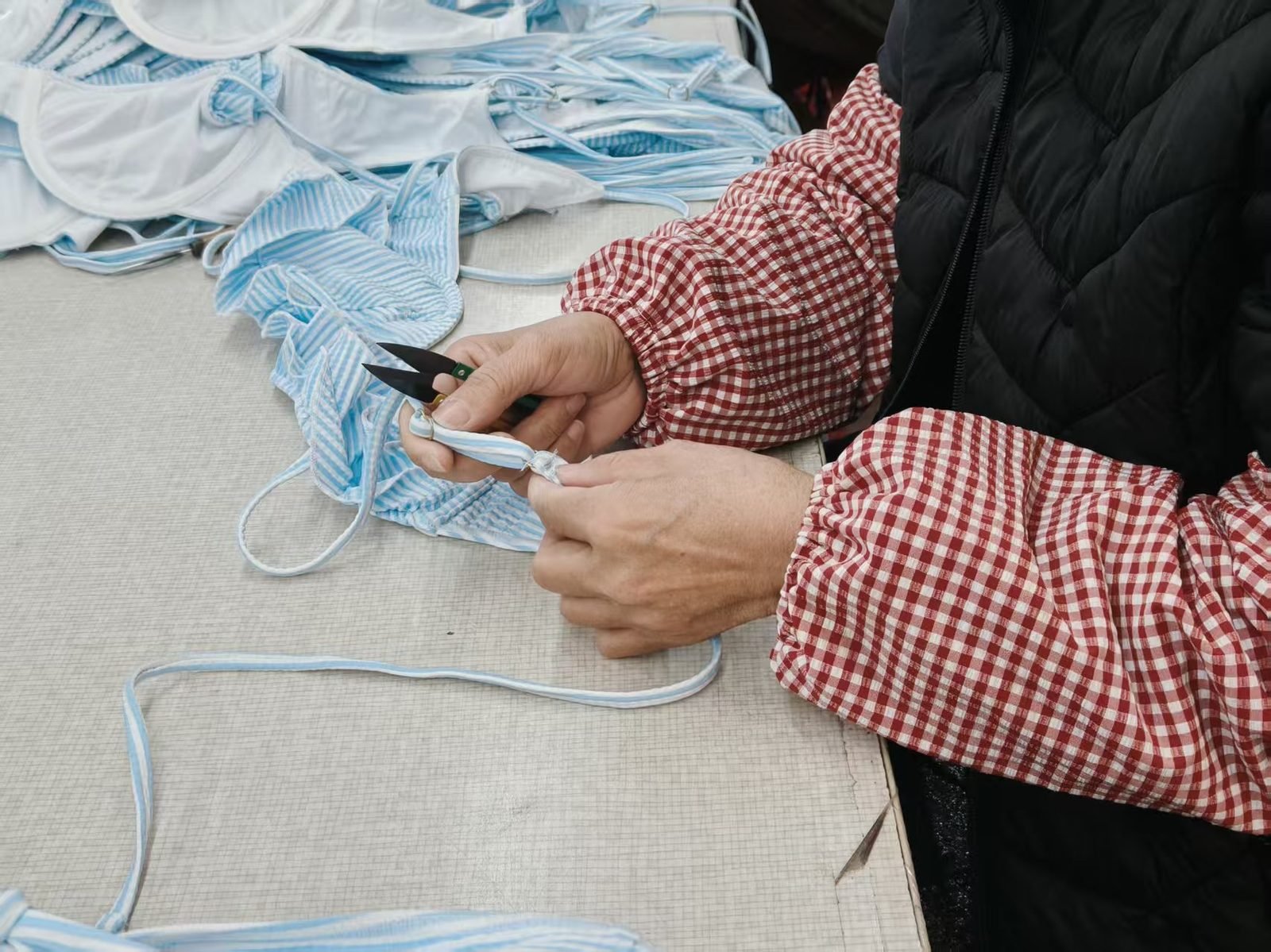
Every piece passes through a trimming step where workers cut loose threads by hand before packing. It is slow, unglamorous work, and it is the first thing a rushed factory quietly drops. When you ask a factory who trims threads, an answer like “the sewers handle it as they go” usually means nobody owns the job.
Care labels, placed the same way every time
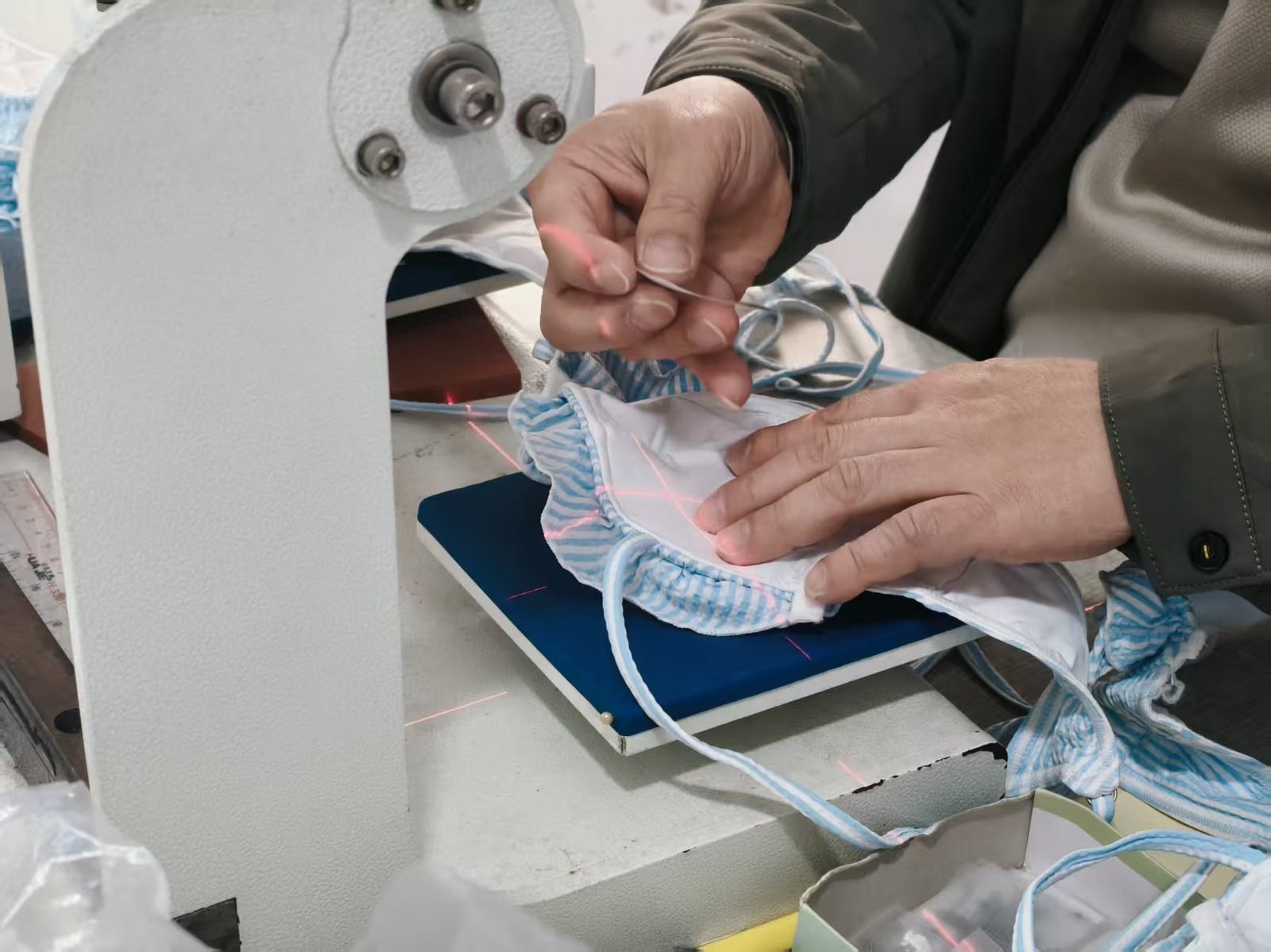
Tagless care labels are applied with a heat press, and a laser guide on the press keeps placement consistent from the first piece to the last. The label carries your branding, size, and care instructions, so a crooked one is both a cosmetic flaw and a piece of your brand presented badly. Consistency here is a small thing that photographs well.
Hangtags and the last hands on the garment
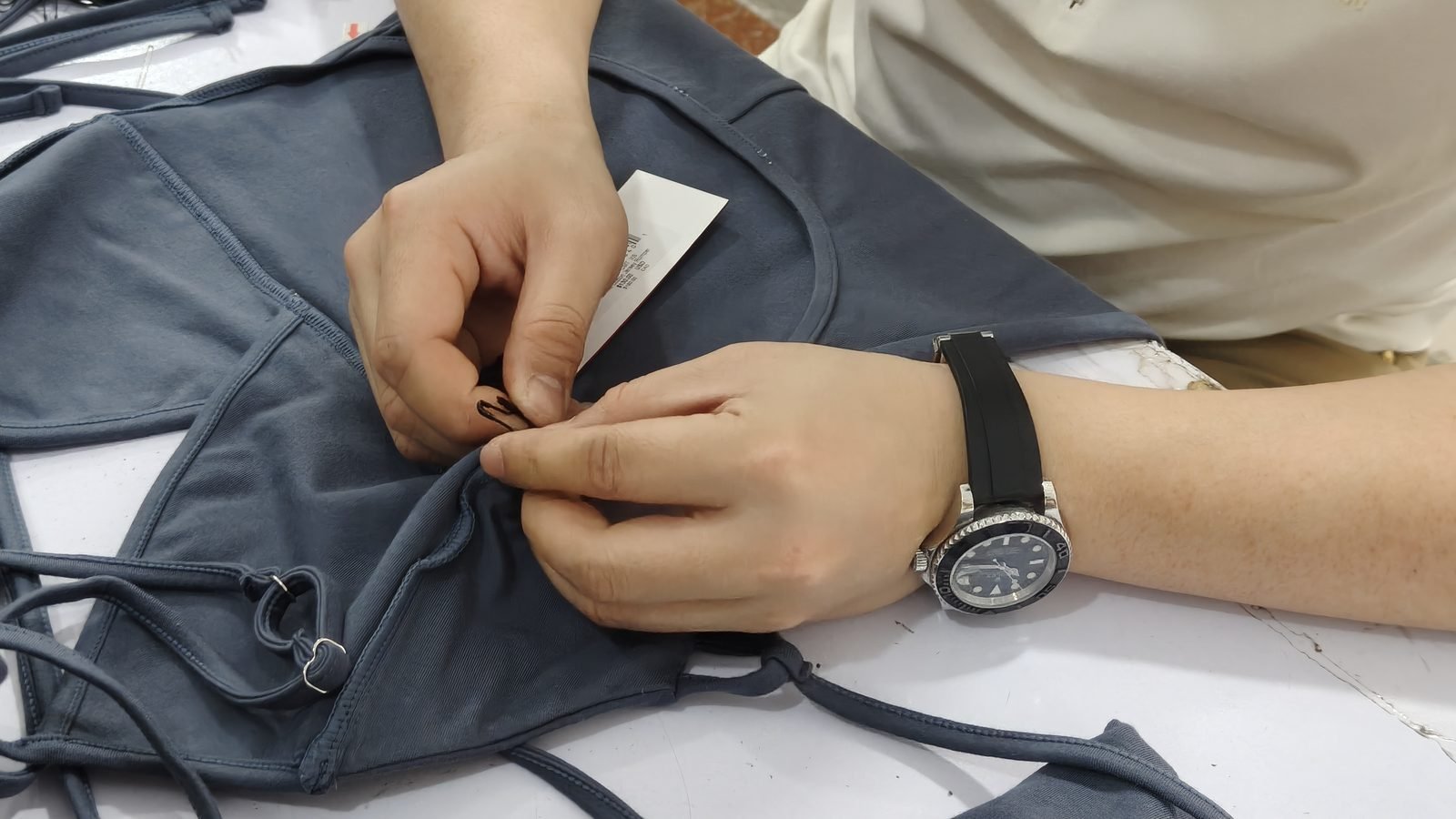
Hangtags are attached by hand and checked against the order so the right tag lands on the right size. This is the last time a person handles each garment before it is folded and bagged, which makes it a natural moment to catch anything the earlier steps missed.
Packing is part of quality control
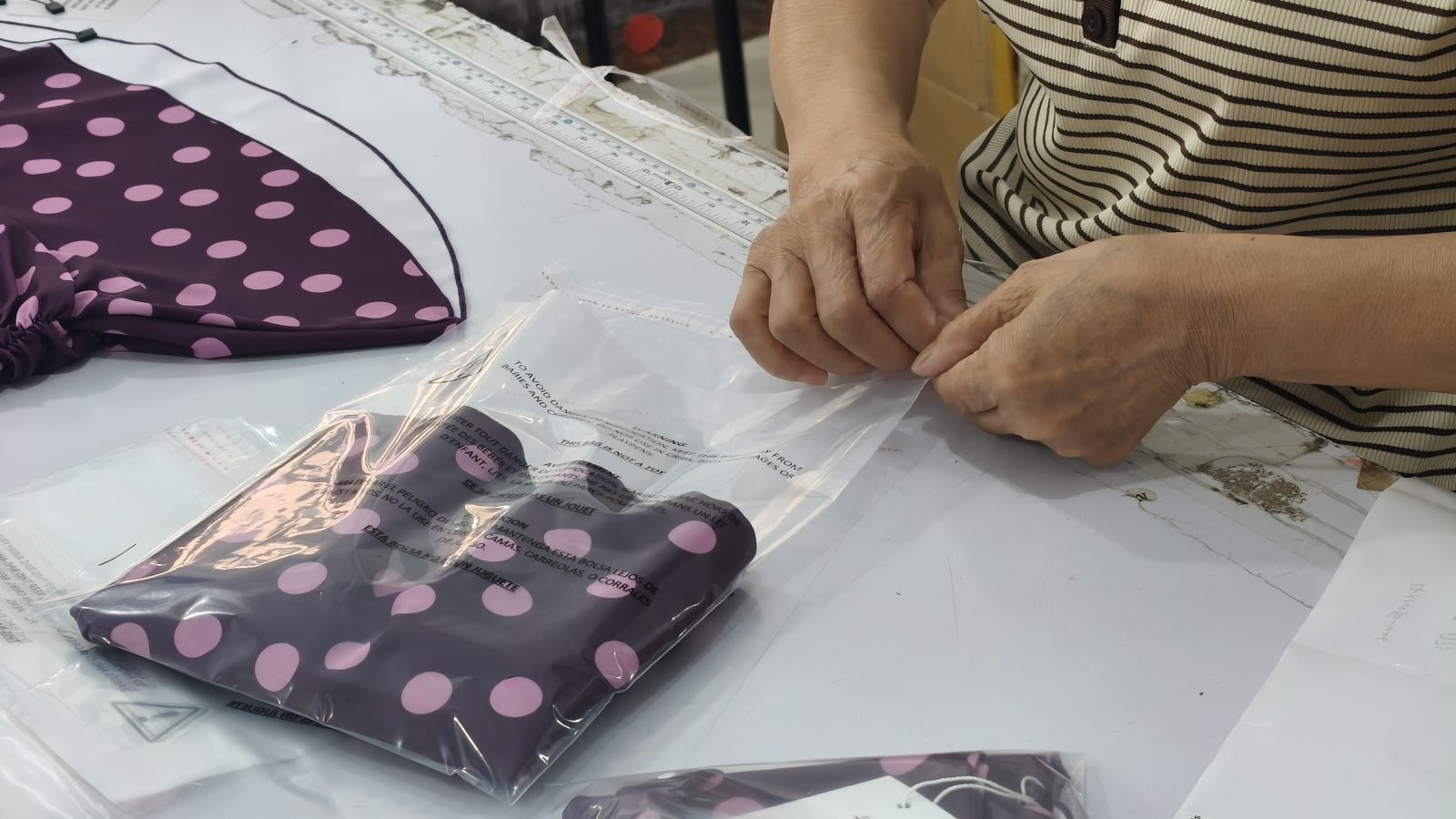
The polybag your swimwear ships in is a compliance item, not just protection from dust. Many retailers and marketplaces in the US and Europe require suffocation warnings printed in the languages of the destination market, and a missing warning can get a carton refused or a listing suppressed. It is a few lines of small print that experienced factories handle as routine.
Packing is also the last chance to verify the order itself. Folding, size stickers, assortment per carton, and carton marks are checked against the packing list, so what arrives at your warehouse is ready to be received rather than re-sorted. Re-sorting a shipment at a fulfillment center costs more than the checking would have. Retail-ready is a standard your factory should be able to define in plain language.
What to ask any factory about QC
Whether you end up working with Enjoy Apparel or someone else, a few direct questions will separate factories that inspect from factories that say they inspect. Ask these before you commit:
- At which stages do you inspect, and who signs off at each stage?
- How do you check measurements, and what tolerance will we agree on before production?
- Can I see inspection photos or records from a recent, comparable order?
- How do you keep sizing consistent across a full size run?
- What exactly happens when your inspectors find a defect?
- Do you welcome third-party inspections, and how would we schedule one?
- How do you handle labeling and packaging compliance for my market?
A factory that answers these without hesitation has done the work. A factory that answers with “we have strict quality control” has given you a slogan.
Frequently Asked Questions
Do you welcome third-party inspections like SGS?
Yes. Third-party inspections are welcome, and the inspection plan is agreed per order so the scope and timing are clear on both sides. Buyers typically book an inspector when goods are packed or close to packing. Tell us your inspection company’s requirements and we will coordinate the schedule with them.
Can I get inspection photos before shipment?
Yes, inspection photos can be arranged per order. Buyers most often ask for measurement records, stitching close-ups, and packing photos. Let us know what you want documented when your order is confirmed, and we will build it into the inspection routine for that order.
What happens if defects are found during inspection?
Defective pieces are pulled from the batch. Depending on the problem, they are reworked and inspected again, or remade if they cannot be brought to standard. The cause is traced back to the line so the rest of the run does not repeat it. Only pieces that pass go into cartons.
How do you control size consistency across a size run?
Every size has its own graded measurements on the spec sheet, so pieces from each size get measured rather than only the sample size. In-line checks during sewing catch drift early, and tolerances are agreed with you before bulk production, which keeps a medium meaning the same thing on every piece in the order.
Everything above comes down to a single idea. Inspection is a sequence of specific, checkable actions, and any factory you work with should be able to walk you through theirs the way we just walked you through ours. If you would like to talk through how your own styles would be inspected, send them to admin@zsenjoyco.com and we will map out an inspection plan for your order. For the bigger picture of how production works here, start with our OEM and ODM services page.

