
Circular Economy in Textiles: Recycling Ocean Plastics into Premium Activewear
Introduction
The global textile industry faces immense pressure to adopt sustainable practices, driven by environmental concerns and increasing consumer demand for eco-conscious products. A pivotal shift is occurring towards a Circular Economy model, where waste is minimized, and resources are kept in use for as long as possible. A prime example of this is the innovative process of recycling ocean plastics into high-quality textiles, particularly for the booming activewear market. For B2B manufacturers like Yingzhuo, integrating these recycled materials is not just an ethical choice but a strategic move to meet the demands of global brands committed to sustainability.
The Problem: Plastic Pollution and Textile Waste
•Ocean Plastics: Millions of tons of plastic waste enter our oceans annually, threatening marine ecosystems and human health. Fishing nets, plastic bottles, and other debris constitute a significant portion of this pollution.
•Textile Waste: The fast fashion cycle contributes to massive textile waste, with a large percentage ending up in landfills, where synthetic fibers can take hundreds of years to decompose.
The Solution: From Waste to Wearable
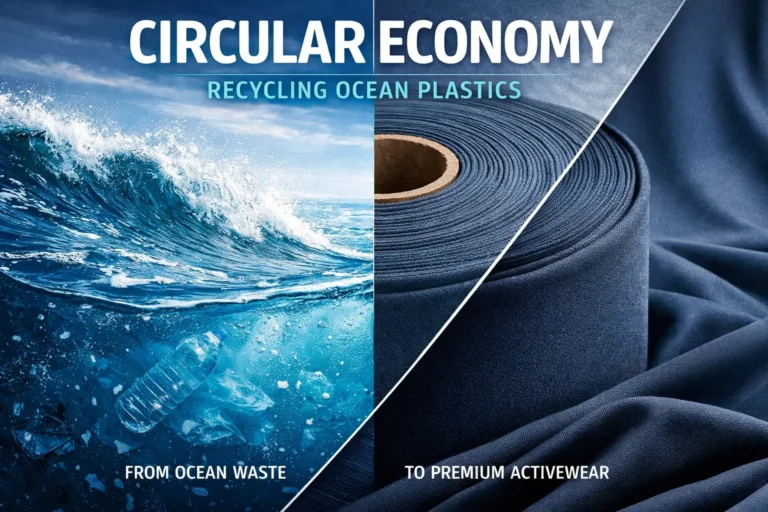
The Circular Economy in textiles aims to close the loop, transforming waste into valuable resources. The process of recycling ocean plastics into activewear typically involves:
1.Collection: Gathering plastic waste from oceans, beaches, and landfills.
2.Sorting and Cleaning: Separating different types of plastics and thoroughly cleaning them.
3.Processing: Shredding, melting, and polymerizing the plastics into high-quality yarns (e.g., recycled polyester, regenerated nylon).
4.Fabric Production: Weaving or knitting these yarns into performance fabrics suitable for activewear and swimwear.
Benefits of Recycled Ocean Plastic Fabrics
•Environmental Impact: Directly addresses ocean pollution and reduces reliance on virgin petroleum resources.
•Performance: Modern recycled fabrics often match or exceed the performance of virgin materials in terms of stretch, durability, moisture-wicking, and UV protection.
•Brand Storytelling: Offers a powerful narrative for brands to connect with environmentally conscious consumers, enhancing brand loyalty and market appeal.
•Certifications: Materials like ECONYL® (regenerated nylon) and GRS-certified recycled polyester provide verifiable proof of sustainable sourcing.
B2B Manufacturing: A Key Enabler
Manufacturers play a crucial role in facilitating this circular transition. Yingzhuo demonstrates leadership by:
•Sourcing Expertise: Establishing robust supply chains for certified recycled materials.
•Technical Proficiency: Developing specialized production techniques to work with these innovative fabrics, ensuring optimal garment quality and performance.
•Design for Circularity: Advising brands on design choices that promote durability, repairability, and future recyclability of garments.
•Transparency: Providing full traceability of materials, from ocean plastic collection to final garment production, building trust with B2B clients.
Conclusion
The integration of recycled ocean plastics into premium activewear is a testament to the power of the Circular Economy in textiles. It offers a tangible solution to environmental challenges while simultaneously creating high-performance, marketable products. For B2B manufacturers, embracing these sustainable practices is not just about compliance but about leading the industry towards a more responsible and resilient future, attracting global brands that prioritize both profit and planet.