


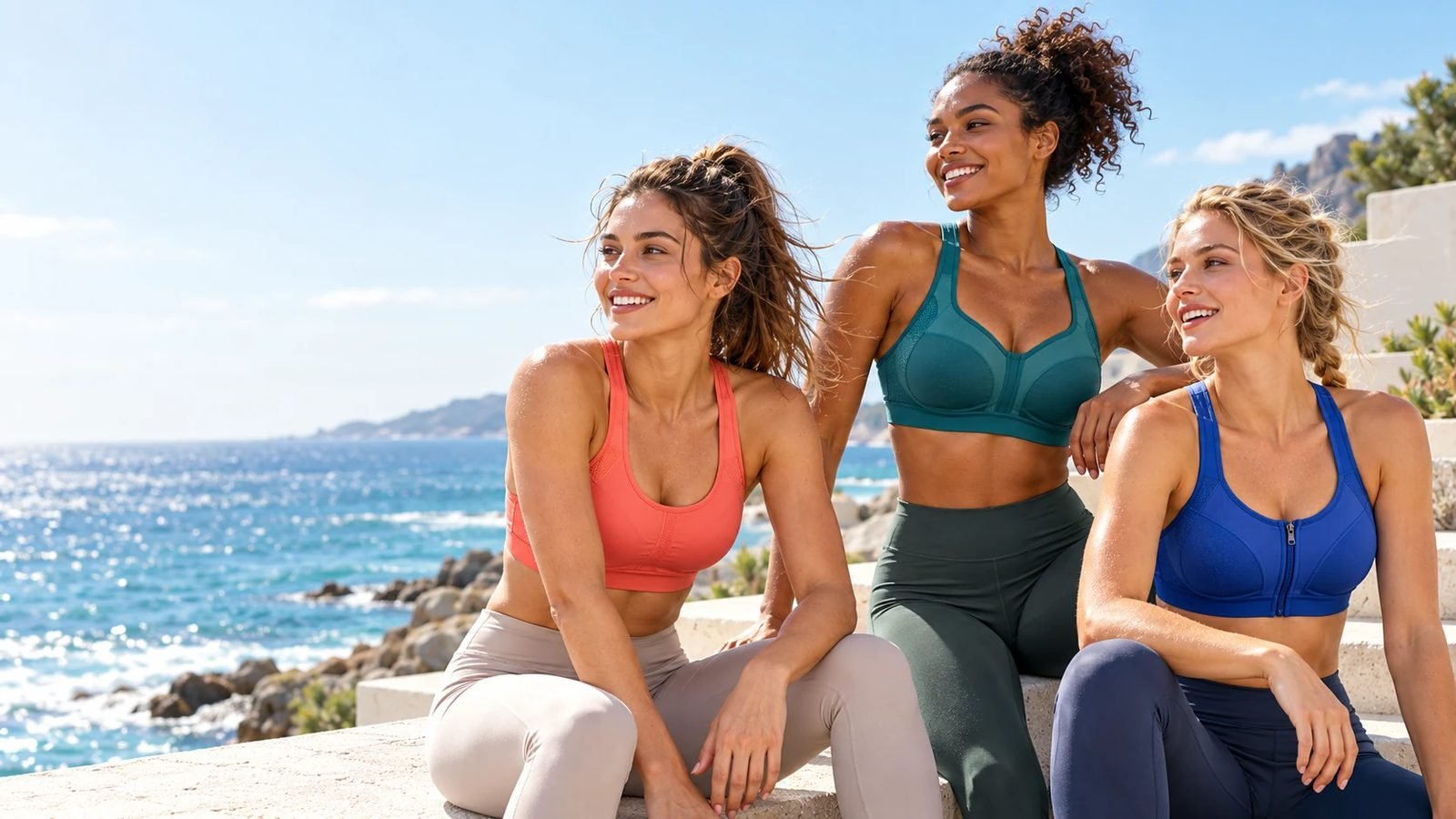
Ask any activewear brand what drives its returns and one answer keeps surfacing. The bra sold as high support shows up in reviews as “fine for yoga,” and the one marketed as light and easy gets sent back for doing nothing at all. The gap rarely comes from bad sewing. It starts much earlier, in a spec sheet that says “medium support” and leaves the factory to guess what that means in fabric, elastic and construction.
This guide is written for brand founders, product developers and sourcing buyers planning a custom sports bra line with an OEM partner. It translates the marketing language of support into specifications a factory can execute, then works through fabric, padding, sizing and testing, and closes with the information that makes a first inquiry answerable in one round instead of five.
What “Support Level” Actually Means on a Spec Sheet
Support is not a single feature. It is the sum of three systems working together, and a factory can only hit your target if you say which system carries the load. The first is compression, where stretch fabric presses breast tissue toward the chest wall and limits movement through tension alone. The second is encapsulation, where each breast sits in its own shaped cup or panel, controlling motion by containment rather than pressure.
Most commercial bras blend the two. A light yoga bra leans on compression by itself. A true high support sports bra usually pairs encapsulation cups with a compressive outer layer, because pressure alone cannot control larger cup volumes at running speed. Writing “high impact” in an email tells the factory almost nothing. Writing “encapsulated cups, compressive outer, built for running” tells it exactly where to start.
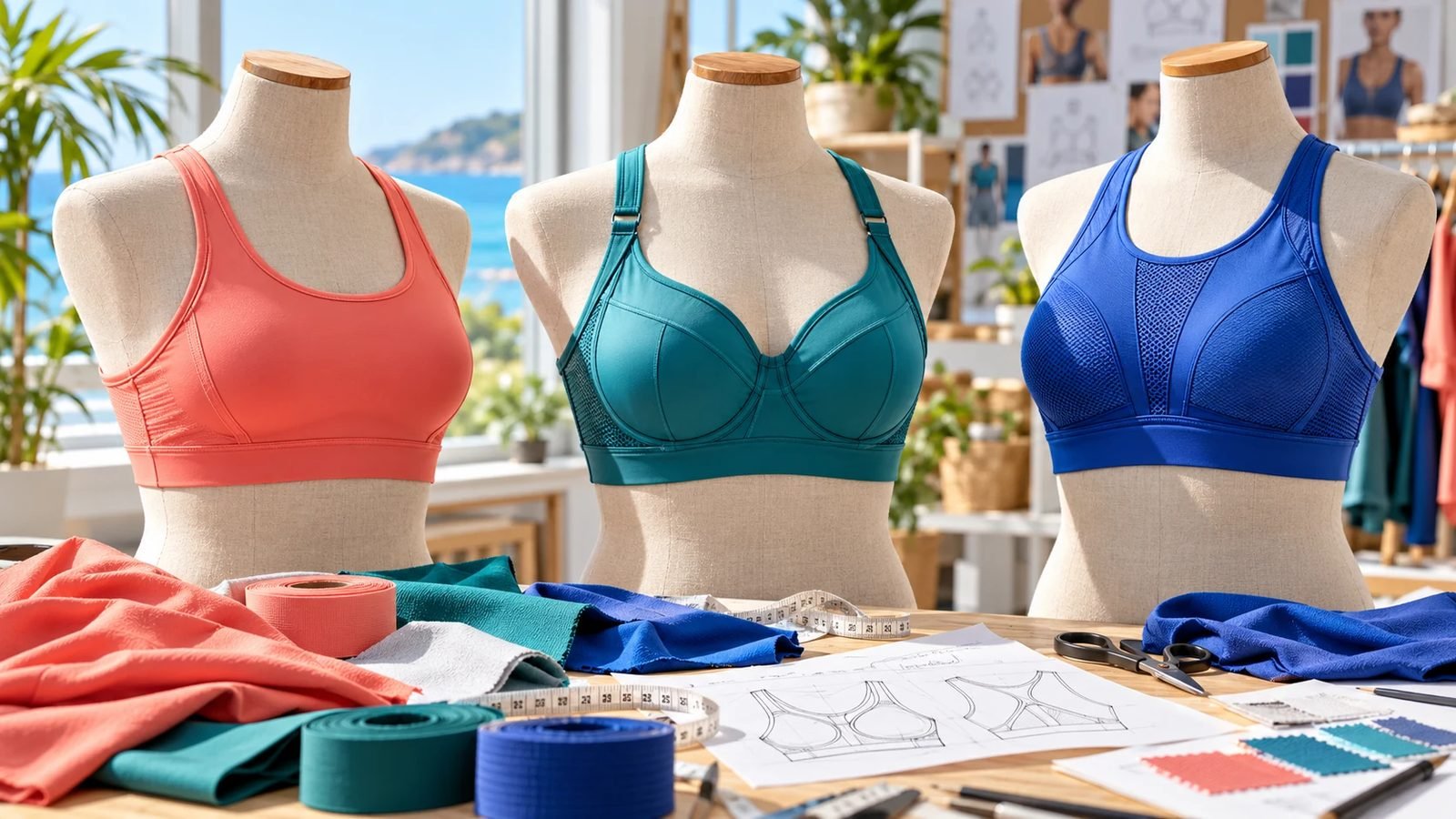
The underband does more work than any other component, typically anchoring the majority of the bra’s support. Its width, elastic tension and the way it is enclosed all belong in your spec rather than in the factory’s assumption. A band that rides up on a fit model is a band that will generate returns at scale.
Straps finish the system. Racerback and cross-back constructions pull support from the shoulders and upper back and suit high-impact training, while straight or adjustable straps read as lifestyle and fit low to medium impact. Convertible designs add hardware decisions and cost. Nom the strap construction and the intended activity in your brief, and the factory can match elastic widths and stitch types without a guessing round.
Tissus Choices by Support Level
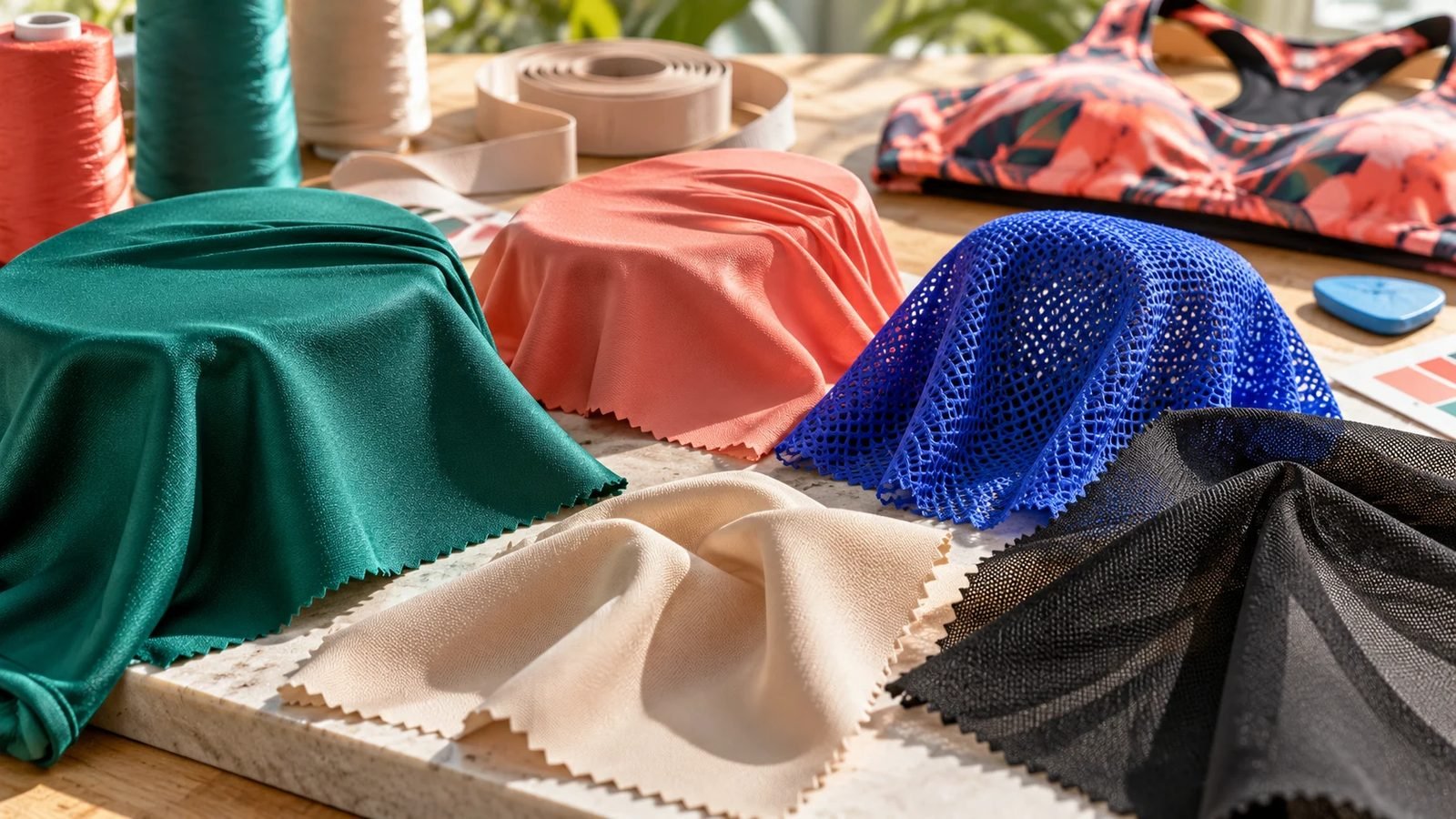
Tissus does the quiet half of the support work, and the blend decision follows the impact level you are targeting. Low and medium support styles can run on softer, lower-tension knits. High support styles need high compression fabric, where the knit is engineered to hold tension through repeated stretch cycles without relaxing.
On fiber, nylon-spandex gives the softer, more matte hand feel that premium activewear brands prefer, and it is the default for studio and lifestyle positioning. Polyester-spandex costs a little less, manages moisture aggressively and holds sublimation prints far better, which makes it the practical base for print-led or volume-priced ranges. Either blend can carry a moisture-wicking finish, but the claim belongs on your hangtag only if the mill data backs it.
Weight and recovery each deserve a line in your spec. Sports bra fabrics typically run heavier than swim fabrics, and high support styles typically sit at the top of that range, because weight buys stability. Recovery, meaning the fabric’s ability to snap back after stretch, matters even more. A bra that stretches beautifully and stays stretched has failed your customer by the tenth wear. Ask for stretch-and-recovery test data rather than trusting a hand-feel judgment.
If you want swatches in hand before committing, Enjoy Apparel pulls sports bra qualities from a fabric library running past 5,000 options across its sportswear and swim lines, including recycled alternatives. Development briefs ship with the relevant weight and compression options side by side, so the decision happens on fabric rather than on a spreadsheet.
Padding and Underwire Options
Padding is a positioning decision as much as a functional one. Removable cups dominate the mid-market because they let the wearer choose and they simplify care instructions, but they generate a known complaint, cups that fold or migrate in the wash. Molded cups solve that by building shape into the bra itself, at the cost of more pattern and tooling work. Unlined compression styles keep cost and care simple and read as athletic rather than shaped.
Underwire sports bras occupy a different niche. They serve larger cup sizes, where encapsulation plus wire support delivers what compression alone cannot, and they answer a demand that much of the category still underserves. Sports bras for large breasts rank among the most consistent unmet needs shoppers voice, and brands that spec them properly tend to keep those customers for years.
Underwire in a garment that flexes through a workout is an engineering problem rather than a styling one. The wire channel, casing fabric and bar-tacked ends all need specification, and the wire gauge must match the intended impact level. Our swimwear line has produced underwire and padded styles for years, and that wire-channel and cup-construction experience transfers directly into sports bra development, which shortens the sampling loop on structured styles.
Sizing Systems That Survive a Size Run
Sizing is where good bras lose their reviews, because the system you choose decides how many ways the fit can drift. S-through-XL alpha sizing is cheaper to grade, easier to stock and simpler for customers, and it works for low and medium support styles where fit tolerance is generous. High support and larger cups outgrow it. Band-plus-cup dual sizing, the 34C logic borrowed from lingerie, fits far more bodies accurately but multiplies your SKU count and grading work.
Sister sizing complicates the picture further. A 34C, a 36B and a 32D share cup volume but not band length, and customers who know this will size across when their own size sells out. If your range uses dual sizing, the size chart needs to acknowledge sister sizes openly, or customer service will answer the same email forever.
Geography adds another layer. US, EU and AU sizing systems label the same body differently, and a brand selling across all three needs conversion tables locked before grading begins rather than after the first shipment. Plus size and petite ranges deserve their own grade rules instead of a straight extension of the core size run.
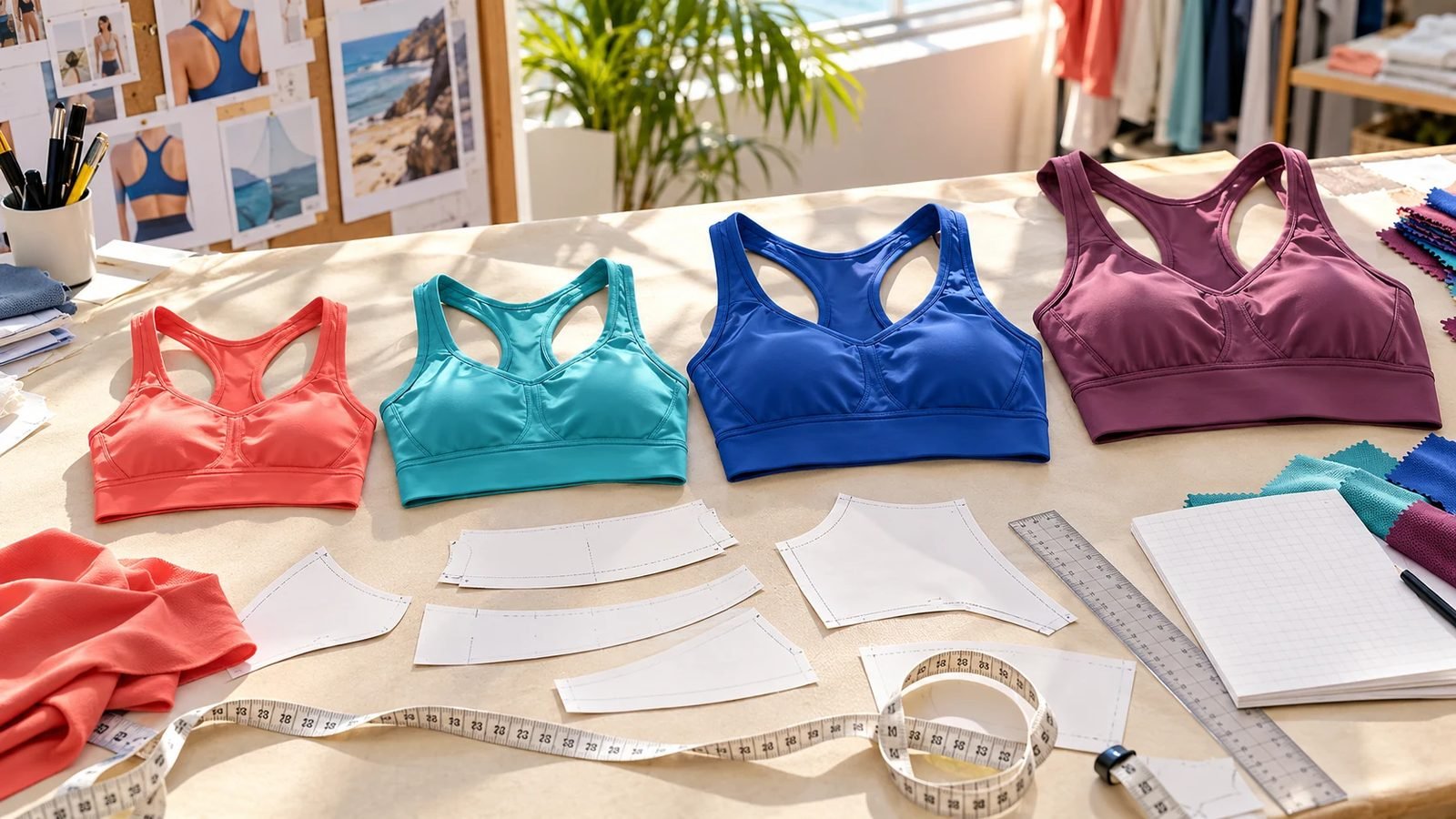
Whatever system you choose, consistency across the size run is the thing to lock before ordering. Grade rules decide how much each measurement grows per size, and an inconsistent grade shows up as a five-star medium and a one-star XL of the very same bra. Approve the graded spec, not just the sample size, and confirm it in writing before bulk production starts.
Testing Before Production Production
A sports bra cannot be validated on a table. Fit and bounce testing on real wearers, moving at the impact level you claim, is the only test that predicts reviews. Run it on more than one body and more than one size, because a bra that controls bounce on a B-cup sample tells you nothing about your DD customer.
Wash testing catches the second failure mode. Removable cups that fold, elastics that relax and prints that crack all surface within a handful of wash and dry cycles, and it is far cheaper to learn that in sampling than in a returns report. Specify the care conditions you intend to print on the label, then test to exactly those conditions.
Process discipline is what makes these tests repeatable across an order. As an ISO 9001-certified factory, we run inspection as a documented sequence from fabric intake through final packing rather than a single check at the end, and the same framework covers bras as well as swim. The logic mirrors the checkpoints in our swimwear quality control process, where each stage is defined, recorded and held to standard before the next one begins.
What to Include in Your OEM Inquiry
The fastest first replies go to inquiries that arrive decision-ready. A complete brief lets the factory price, plan and sample against real numbers instead of assumptions, and it signals that you will be a straightforward partner through production. Cover these points and the conversation starts at solutions rather than questions:
- State the support level you are targeting and the activity behind it, since “high support for distance running” specifies far more than “high support” alone.
- Send reference samples or detailed photos of bras whose fit and construction you want to match or beat.
- Nom your sizing system, alpha or band-and-cup, and attach the size chart with grade rules for the full size run.
- Specify padding and underwire preferences, including whether cups should be removable, molded or omitted entirely.
- Note your fabric preferences, such as nylon-spandex versus polyester-spandex, along with any weight or compression targets.
- Give your target quantity per style and colorway so pricing and material planning reflect the real order.
- Share your target retail price if you have one, because it lets the factory steer fabric and construction toward your margin instead of away from it.
If your line starts from a sketch rather than a reference sample, our ODM team develops original sports bra styles from concept through Pantone-matched colorways, and an exclusive design agreement can keep the resulting designs yours alone. Either route converges on the same next step, which is a conversation with people who build these garments every day.
When a sports bra line moves from idea to roadmap, send the brief or the reference samples through our contact page. Expect a reply with fabric options, a realistic development path and a candid view of the right place to begin.
Frequently Asked Questions
How do compression and encapsulation sports bras differ?
Compression bras hold breast tissue against the chest wall through fabric tension, which suits smaller cups and lower impact. Encapsulation bras give each breast its own shaped cup, controlling movement through structure. High support styles typically combine both, pairing encapsulation cups with a compressive outer layer, and your spec should say which mechanism you expect to do the work.
How long does custom sports bra production take?
Allow at least a month for bulk production once the final sample is approved, with the exact timeline set by style complexity, fabric availability and order volume. Structured styles with molded cups or underwire sit at the longer end, so build that buffer into your launch calendar rather than discovering it mid-season.
Can you make sports bras for large cup sizes?
Yes. Larger cup sizes call for band-and-cup dual sizing, encapsulation construction and, where the design needs it, underwire support carried over from our swimwear wire-channel experience. The size chart should acknowledge sister sizing so customers can find their fit when a size sells through, and the grade rules should be approved across the full run before production begins.

