


Most brands arrive at their first printed swimwear line assuming sublimation is the whole conversation. It is not. Sublimation is only one of three mainstream swimwear printing methods, and it works on a single fiber family. The fabric you choose decides which printing routes are even possible, long before any artwork enters the picture. This guide compares sublimation, digital and screen printing from a sourcing perspective, covering hand feel, durability, the design constraints that catch brands off guard, and how each method’s cost structure behaves as you scale.
The 面料 Decides the Method Before the Design Does
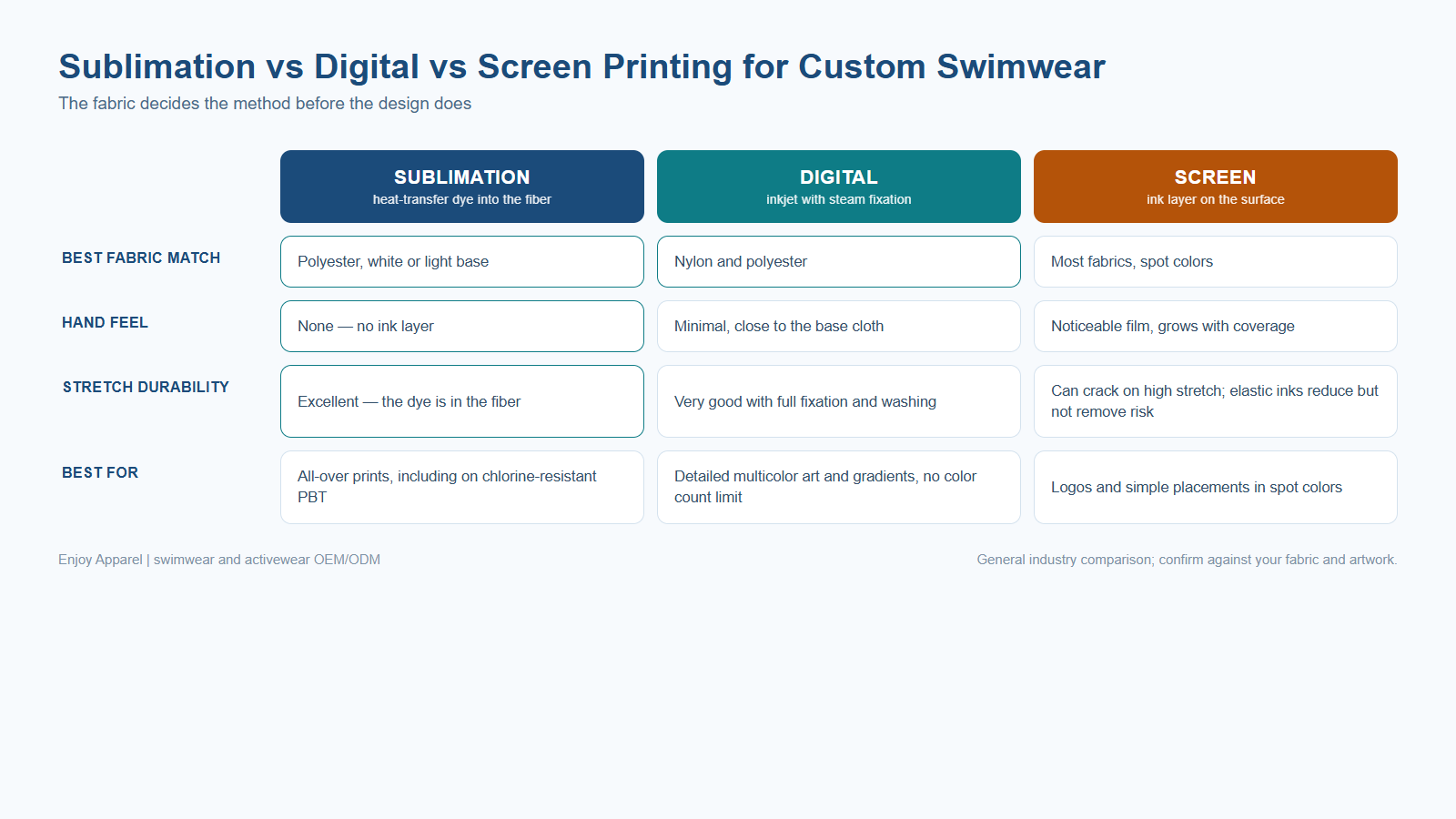
Sublimation is a polyester process, period. The design is printed onto transfer paper with disperse dyes, then heat and pressure turn those dyes into gas that bonds inside the polyester fiber. On nylon or any non-polyester base the dye has nothing to grab, so the print never fixes or washes out fast. Sublimation also needs a white or light base, because the dyes are translucent and take on the color beneath them. If your range runs on nylon-spandex for its matte hand feel, sublimation is off the table.
Nylon fabric points you toward digital printing. Instead of transferring dye through paper, a digital textile printer jets acid or reactive inks directly onto the fabric, which is then steamed and washed to fix the color. The method handles photographic detail, smooth gradients and unlimited colors in a single pass, and it works on the nylon-spandex blends that premium swim brands prefer. That combination is why most print-led designer swimwear at the higher end of the market is digitally printed rather than sublimated.
Screen printing is the oldest of the three and still the right tool for specific jobs. Ink is pushed through a fine mesh stencil directly onto the fabric surface, one color at a time. It excels at simple spot-color artwork, bold graphics with a handful of flat colors, and placement prints such as a chest logo or a back slogan. For complex all-over patterns it becomes impractical fast, because every additional color means another screen, another pass and another layer of ink sitting on the fabric.
Spandex content quietly shapes all three decisions. Swim fabrics typically carry 15 to 20 percent spandex, and that stretch distorts any print once the garment is worn. A design that looks perfect on a flat table can grin, meaning the base cloth shows through as the print separates under extension. Whatever method you choose, evaluate the print trial at stretch rather than laid flat, or you will approve something your customers never actually see.
Hand Feel, Stretch and Durability
Hand feel is where the three methods diverge most obviously. Sublimation adds nothing to the fabric surface, because the dye lives inside the fiber, so a sublimated suit feels identical to an unprinted one. Digital printing sits very close behind; the inks bond with the fiber and any change in hand is usually subtle. Screen printing leaves an ink film on top of the fabric that you can feel with your fingertips, and that film becomes more noticeable as the artwork grows.
Stretch exposes the screen print’s weak point. On a fabric that extends 50 percent or more in wear, a surface ink film has to stretch too, and standard inks tend to crack or flake over time. Elastic ink formulations exist and a good factory will use them on swim, but the risk never drops to zero. Sublimation and digital prints move with the fabric because the color sits in the fiber rather than on it, which is why all-over printed swimwear rarely uses screen printing.
泳衣 also faces durability tests most apparel never meets. Chlorinated pool water attacks dyes and fibers, sunlight drives UV fading, and wet fabric rubbed against skin or a pool edge tests crocking, the industry term for color rubbing off. Prints on nylon typically need thorough fixation and after-washing to hold up, and no printing method fully cancels chemistry that is wrong for pools. Ask any factory for colorfastness data to chlorinated water and to rubbing, wet and dry, before you approve a print for bulk.
If chlorine exposure is central to your positioning, the base fabric matters as much as the ink. Chlorine-resistant PBT, a polyester-family fiber, typically holds its shape and color far longer in pools than standard nylon-spandex, and because it is polyester at heart it accepts sublimation well. That pairing, PBT plus sublimation, is how much of the training and swim-school market is built, where suits live in chlorinated water several days a week and the prints must survive the same schedule.
Design Constraints That Surprise Brands
The first surprise is the difference between all-over and placement printing. All-over prints are usually printed on roll fabric before cutting, so the pattern lands wherever it lands on each piece. That keeps cost down, but it also means no two suits are identical and motifs can sit awkwardly across a bust or a hip. If your design needs a flower centered on a cup or a stripe hitting exactly at the waist, you are asking for placement printing, which is a different workflow with different pricing.
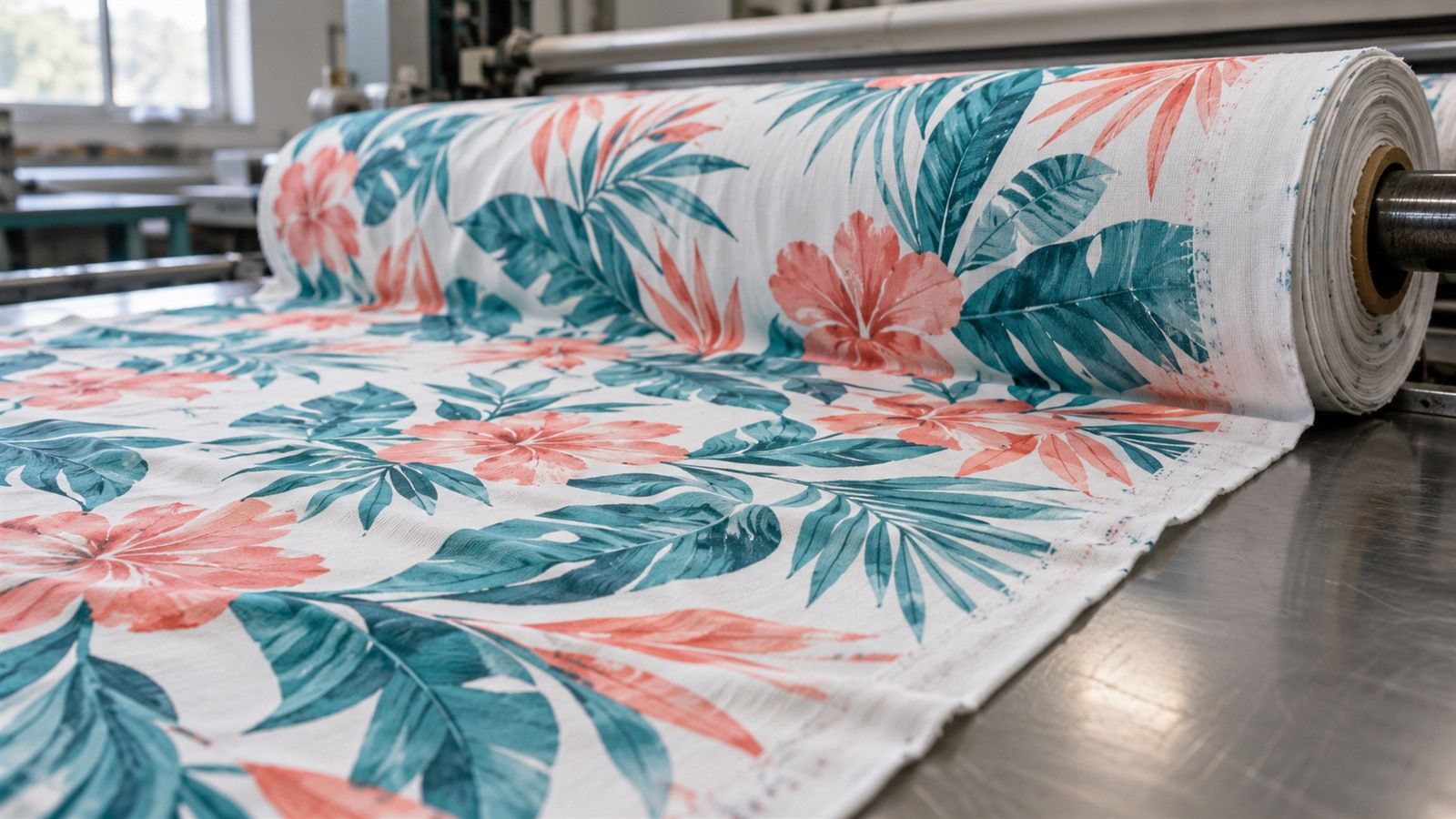
Placement work at its most precise becomes engineered printing, where each pattern piece is cut first and then printed with the artwork positioned to that exact panel. Done well, the motif continues across seams and the suit reads as one continuous image. Done casually, side seams misalign by a centimeter and the whole garment looks off. Engineered prints demand close coordination between the pattern maker, the print house and the cutting room, so expect more sampling rounds and a higher unit cost.
Dark nylon is the second recurring surprise. Digital inks are translucent, so light artwork printed over a dark base disappears or turns muddy. The standard apparel fix is a white underbase beneath the design, but on swim fabric that underbase adds hand feel, stiffens the print area and can crack under stretch. Most swim specialists will steer you toward dark artwork on light bases, or toward sublimation on white polyester, rather than fighting a dark nylon ground.
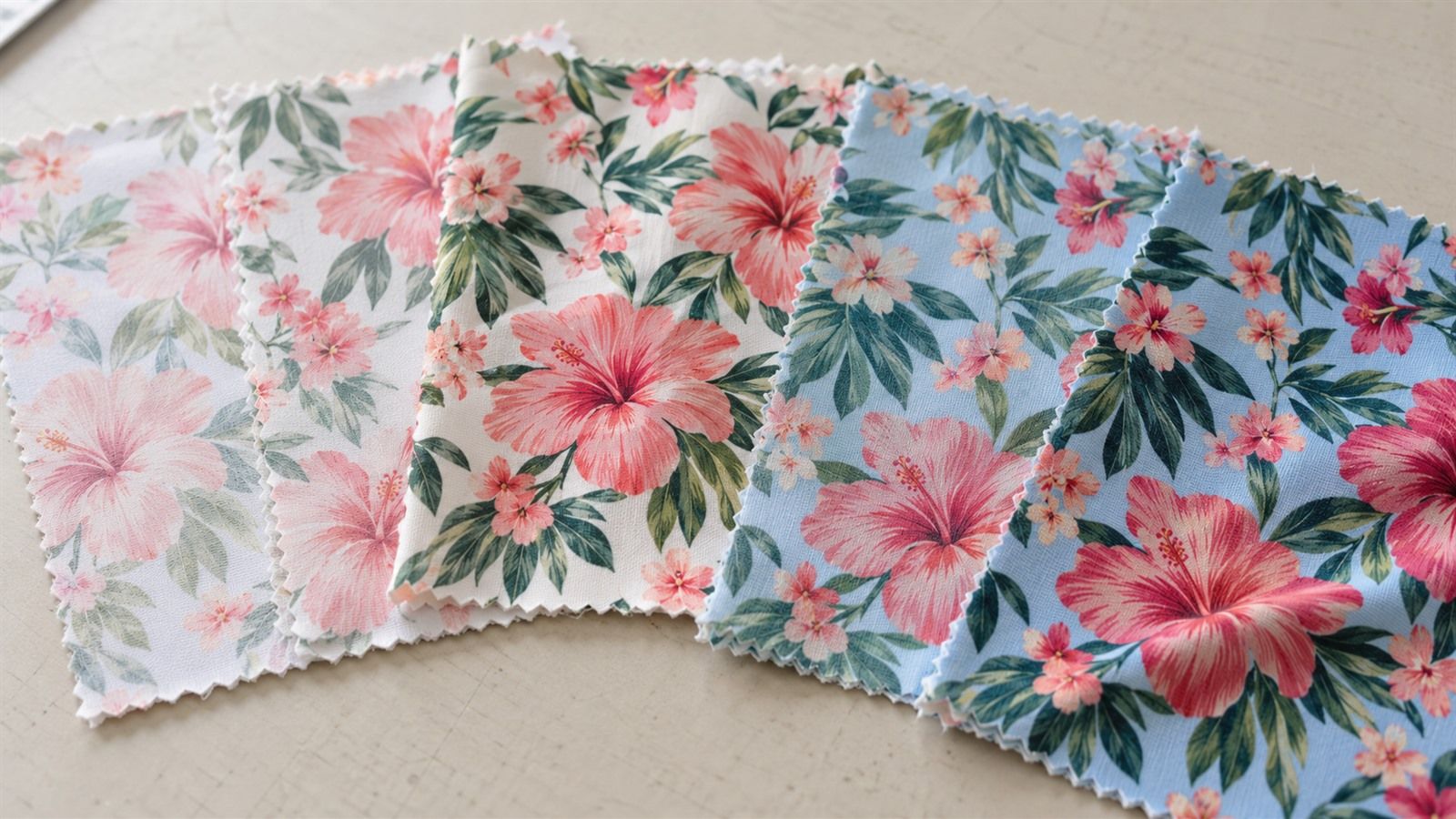
The third surprise is procedural. A strike-off is a small print trial run on your actual base fabric so you can approve color, scale and hand feel before bulk yardage is printed. It is not a garment, and approving it says nothing about fit. The sewn sample, often called a fit sample or proto, is a separate approval with its own round. Brands that treat the strike-off as the sample tend to discover fit or placement problems only after the fabric is already printed.
What Drives the Cost of a Printed Suit
Screen printing prices by color count. Each color needs its own screen, and the setup fee is typically charged per color per design, so a six-color graphic costs meaningfully more to start than a two-color one. Once the screens exist, however, the per-piece cost at volume is low, which makes screen printing economical for large runs of simple artwork and for logos repeated across a whole collection.
Digital printing inverts that logic. There are no screens and essentially no setup fee, so a small batch spread across eight colorways costs about the same per piece as a single colorway. That flat structure is ideal for testing a print-led collection or running many designs in low volume. The trade-off appears at scale, where screen printing’s setup cost is amortized away while digital’s per-meter ink cost keeps its price line flat.
Coverage is the quiet variable in every quote. A sparse motif on a light base uses a fraction of the ink or sublimation paper of a dense, saturated all-over print, and suppliers price accordingly. Two suits in the same fabric can carry very different print costs purely because one design covers every square centimeter. When you compare quotes, compare them at the same coverage, or the cheaper number may simply be printing less color.
How We Approach Printed 泳衣 at Enjoy Apparel
Enjoy Apparel is an OEM and ODM swimwear and yoga wear manufacturer based in Shaxi, Zhongshan, and we have been building custom collections with overseas brands since 2014. Our fabric options cover nylon-spandex, polyester-spandex, chlorine-resistant PBT and GRS-certified recycled qualities, with UPF 50+ and quick-dry finishes available, so the fabric-first logic in this guide is exactly how print projects start with us. You can browse the silhouettes we build across our swimwear range.
For branding, our custom logo options run from silk screen and heat transfer to silicone, flock, reflective, emboss and deboss finishes and embroidery. The same thinking extends beyond the garment itself, and our guide to private label packaging, hangtags and logo application covers how those pieces come together into a retail-ready product.
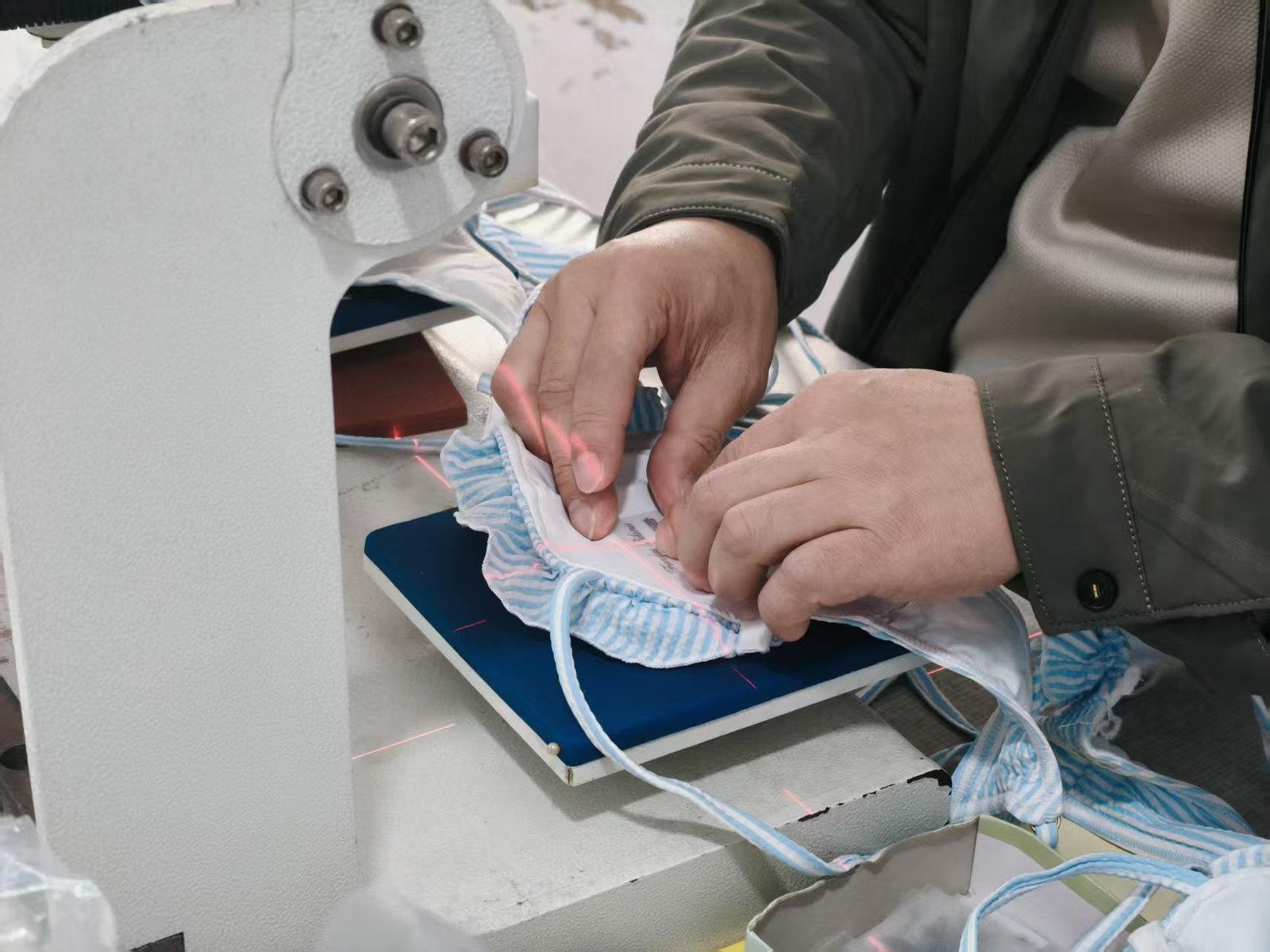
For full prints, we color-match to your Pantone references and run a strike-off on the actual production fabric for your approval before any bulk yardage is printed. The strike-off sits inside our standard 14 to 21 day sampling window, so print approval and fit approval move in parallel rather than one waiting on the other. For brands building a broader private label swimwear line, that print workflow folds into the same development process as solid colors.
The Short Version, and Where to Start
The method follows the fabric. Polyester and white bases point to sublimation, nylon-spandex points to digital printing with acid or reactive inks, and screen printing earns its place on simple spot colors and placement logos. Beyond that, judge every print at stretch, ask for chlorinated-water and rubbing fastness data, and treat the strike-off as a color approval rather than a garment approval. Brands that internalize those four points avoid most of the expensive surprises in custom printed swimwear.
If you have a print concept, the fastest route to a real answer is to send it over. A few details make the first reply far more useful:
- Your artwork file or a reference image, plus the Pantone codes for any colors that must match your brand palette.
- The base fabric you have in mind, whether nylon-spandex, polyester-spandex or PBT, or simply the positioning you want the suit to have.
- Whether the print is all-over or placement, with a note on any motifs that must land in exact positions.
- Your estimated quantity per design and colorway, so we can recommend the printing method that fits the run size.
- Any durability requirements, such as heavy chlorinated pool use for a training or swim-school line.
Send those to admin@zsenjoyco.com or message us on WhatsApp at +852 9641 7199, and we will come back with the fabric and printing route we would recommend, plus anything in the artwork that needs adjusting before sampling begins.
Frequently Asked Questions
Can you sublimate on nylon swimwear fabric?
Not in any durable way. Sublimation dyes bond with polyester fibers, and nylon gives them nothing to fix to, so the print either fails to take or washes out quickly. Nylon-spandex swimwear is normally printed digitally with acid or reactive inks formulated for polyamide fibers, then steamed and washed to lock the color in. If you want sublimation specifically, the practical answer is to move the style onto a polyester or PBT base.
Will prints fade in chlorinated pools?
Any print degrades eventually in chlorine, but the speed varies widely. Chlorine-resistant base fabrics such as PBT, properly fixed digital inks and sublimation on polyester all hold up far better than a poorly fixed print on standard nylon. What matters is verified colorfastness to chlorinated water, so ask for test results rather than assurances. Care instructions that tell customers to rinse suits in fresh water after swimming also extend print life noticeably.
What is the difference between a strike-off and a fit sample?
A strike-off is a small print trial on the actual base fabric, used to approve color, scale and hand feel before bulk yardage is printed, and it is not a sewn garment. A fit sample is a finished piece made to your pattern, used to approve sizing, construction and fit on a body. Printed styles need both approvals, and they usually run in parallel so the project does not lose weeks to a strictly serial process.

