


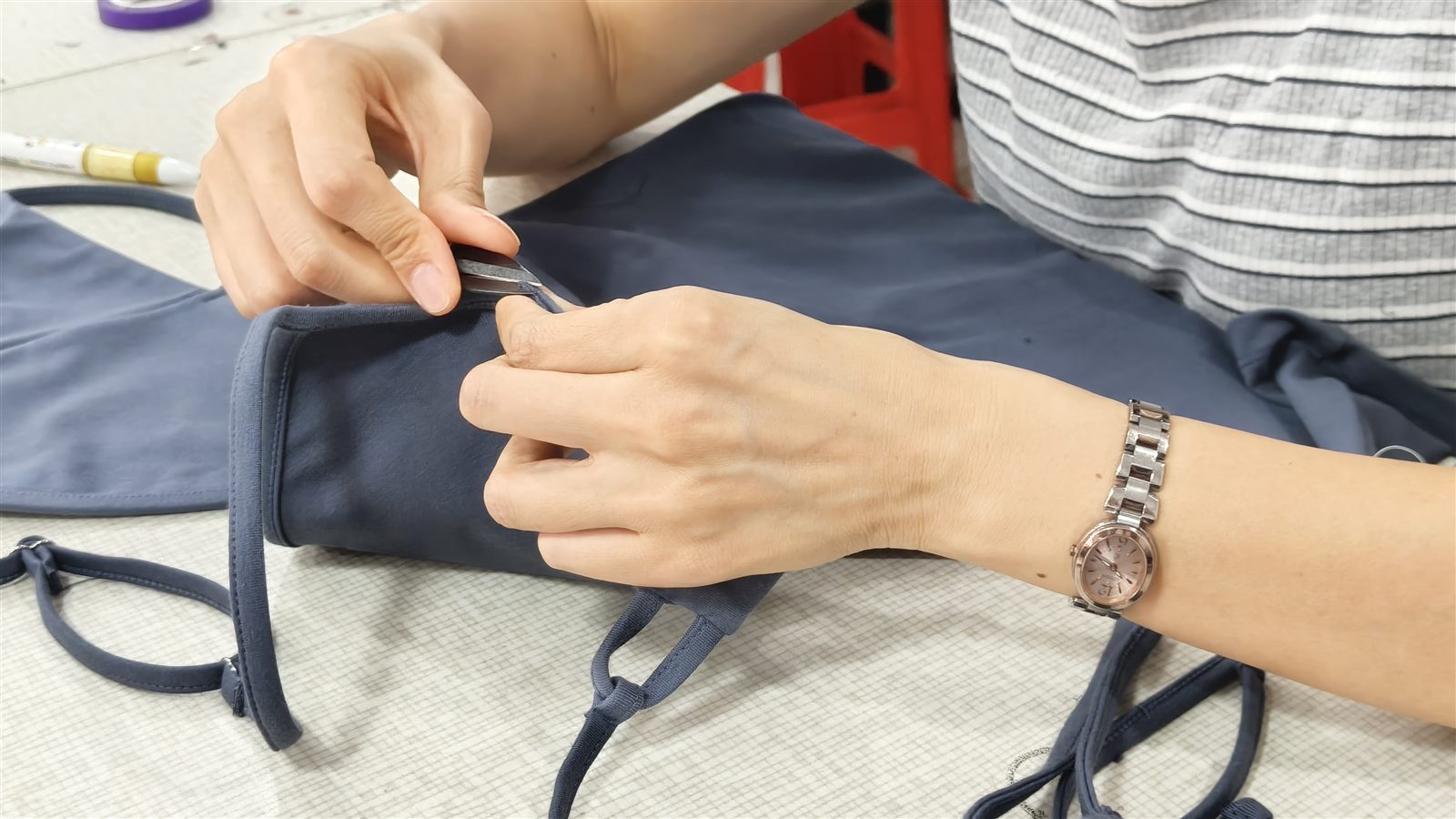
Imagine opening a swimwear sample, trying it on, and sending your supplier a message that says, “The fit feels wrong. Please improve it.” You may know exactly what bothers you. The person revising the pattern still has to work out which area you mean, what you compared it with, and whether you want a correction or a different design.
This guide is for brand founders and buyers preparing swimwear sample feedback. It explains how to turn an observation into a usable revision request, what to photograph, and how to keep the next sample tied to an agreed reference. The examples are hypothetical communication examples, not measurements or results from an Enjoy Apparel customer order.
Start by Identifying the 样衣 You Are Reviewing
Before discussing fit, give the review a clear identity. Put the style reference, sample size, colorway, sample round, and review date at the top of your comments. 姓名 the technical package version you used. If the factory sent a sample in a substitute fabric or with temporary hardware, record that fact before interpreting what you see.
A tech pack brings together drawings, measurements, materials, construction details, and revisions. A measurement sheet is only part of that record. Techpacker’s overview of technical packages explains these components and the role of a revision log. For this review, identify which version is current and which changes have already been agreed, rather than asking your supplier to reconstruct the decision from separate messages.
Give each sample round its own review record. “Blue one-piece, second sample, medium” is a better starting point than “the suit you sent last time.” If more than one person reviews the style, agree who will combine their comments. Separate opinions can be useful during development; conflicting instructions should be resolved before they become the factory’s next task.
Also state the purpose of this particular review. You might be evaluating the silhouette while the final fabric is still under discussion. Alternatively, you may be checking a revised strap against an earlier comment. Naming the purpose lets you identify what you can approve now and what must remain open. An unfinished component should not quietly become an approved detail.
Separate What You Observed from What You Want Changed
“Too tight” describes an experience, but it does not tell your supplier whether the sample differs from the specification. Measure the relevant points using the agreed method, record the actual result, and compare it with the current target and tolerance. Then add your fit observation. Designer Amy Barnhart’s prototype review guidance makes this distinction between checking the sample and deciding whether the requested specification needs changing.
For a hypothetical one-piece review, you might write, “The shoulder area feels restrictive during the fitting. The recorded body-length measurement matches our current specification. Please review the fit with us before changing the pattern.” That message identifies an observation without pretending to have diagnosed its cause. It invites a technical discussion instead of prescribing an arbitrary increase.
A different case calls for different wording. If a measured point falls outside the agreed tolerance, record the point name, the specified value, the actual value, and the measurement method. Ask the supplier to review that discrepancy. Do not quietly replace the target with the sample’s actual measurement just to make the paperwork agree.
For a deliberate design change, say what is changing and what should remain. For example, “We would like more rear coverage than the current approved drawing shows. Please propose an updated back view for review, while preserving the front design.” This is a request for a new decision, not an accusation that the existing sample was made incorrectly.
Use the same distinction for adjustable details. Before commenting on a strap, record the adjustment position used in the fitting. Ask whether your observation persists at another agreed setting. Do not describe a photograph taken at one setting as proof that every wearer or every size will experience the same issue.
Photograph the Context and the Specific Detail
A useful feedback image should let someone locate the issue before trying to interpret it. Take an overall view, then a closer view of the area you are discussing. Keep the style identity and image numbering in the review document. Barnhart’s guidance recommends front, back, side, and problem-detail photographs as a visual record of a prototype. Select the views that make your particular comment understandable.
Suppose your comment concerns the back neckline. An overall back view tells the reviewer where the neckline sits in the design. A closer photograph can show the edge you are referring to. Send both with a short note explaining the observation. A tight crop without context may leave the reviewer unsure which part of the garment is in frame.
Photographs of a garment on a dress form can help show where a detail is located, but they do not replace a fitting on your intended wearer. Similarly, a photograph of a flat garment can document its construction without proving how it feels in use. State the setup so the reader understands what the photograph can and cannot demonstrate.
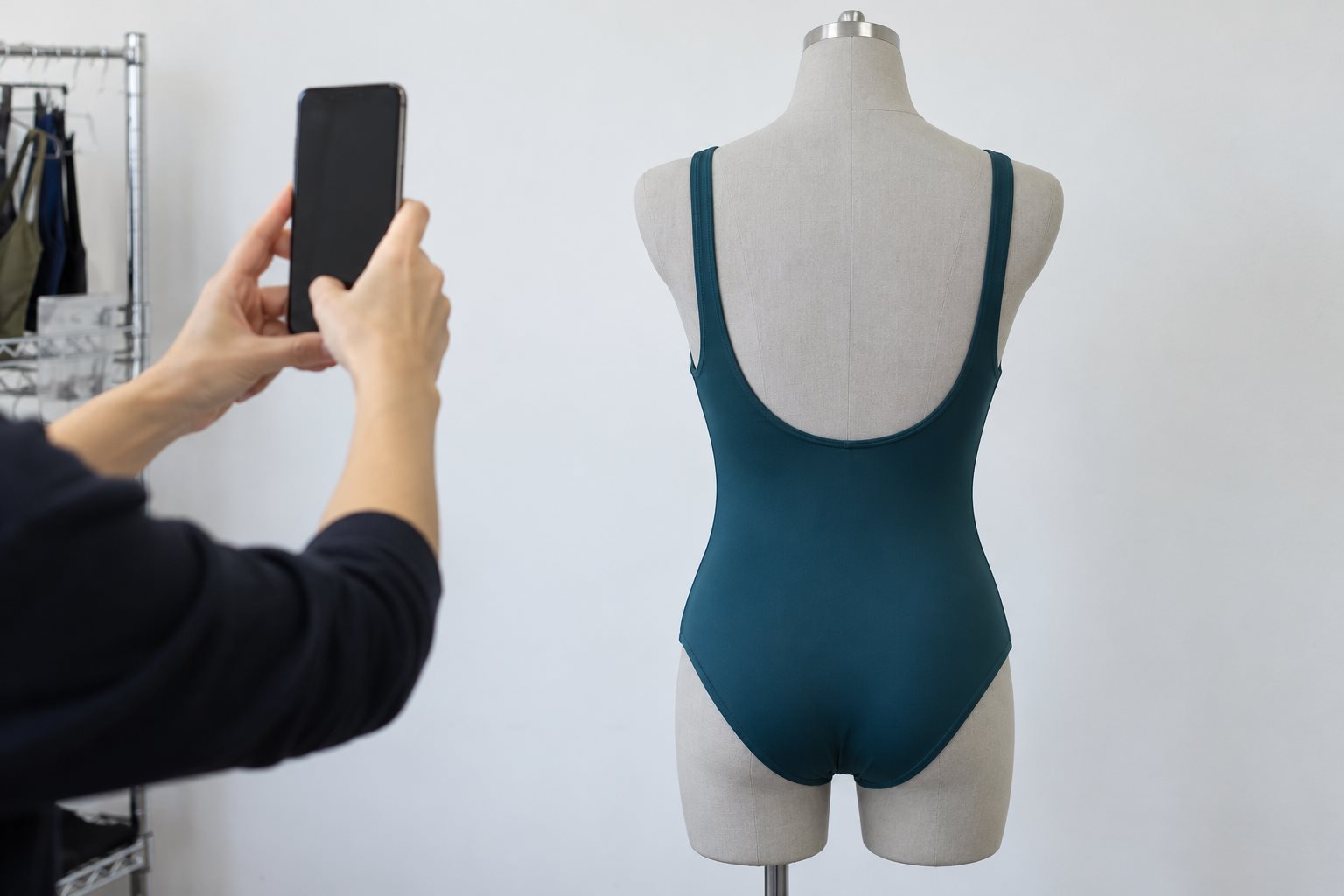
When photographing an area, keep the relevant edges visible and avoid pulling the fabric unless your comment specifically concerns that action. If you manipulate the garment, describe what you did. Use consistent camera positions when comparing sample rounds where practical. The goal is a useful record, not an advertising photograph with a flattering angle that hides the area under discussion.
Keep color decisions separate from these location photographs. A phone image is useful for pointing to a panel, seam, or trim. For a color approval, identify the physical reference and agree how the supplier should evaluate it. Do not turn an incidental image taken for fit comments into an undocumented color sign-off.
Give Materials and Construction Their Own Comments
Keep feedback about the garment’s shape distinct from feedback about its components. “The suit needs improvement” can conceal several unrelated requests. You may like the silhouette while wanting a different lining feel, another clasp, or a revised label position. Write each request against the relevant component so that accepting one detail does not accidentally accept all of them.
The bill of materials is the place to identify those components. Techpacker’s worked tech-pack example shows how a package connects materials, hardware, construction callouts, and measurements. Apply that documentation principle to the swimwear style you are developing; do not copy dimensions or construction instructions from an unrelated garment.
For a proposed lining change, identify the current lining reference and explain your objective. You could request an alternative for comparison because you prefer a different feel. Ask the supplier to explain what else would need review if you adopt it. Do not describe the replacement as approved before you have agreed which material the next sample should use.
A request about appearance is also different from evidence about performance. If you need a verified performance claim, discuss the relevant testing and evidence separately. A sample photograph or a favorable first impression should not become a claim about protection, durability, or compliance. Keep the review honest about what has actually been assessed.
Enjoy Apparel provides OEM and ODM development for swimwear and activewear, with customization options covering fabrics, sizing, logos, labels, and packaging. When discussing a project, identify the decisions you have already made and the areas where you want proposals. Our swimwear range provides product context; your review notes should describe the requirements of your own style.
Send One Revision Record and Define the Approval
Give each requested revision a short identifier that you can reuse in the next review. A note such as “R03: review the back coverage proposal” is easier to follow through than a changing description scattered across messages. Keep the identifier attached to the relevant drawing or photograph, and record whether the action is a correction, a proposed design change, or a question.
Before sending your review, check the following:
- The sample identity and current document version are clear.
- Each observation names the area and includes the evidence needed to understand it.
- Requested changes are distinguished from corrections to the existing specification.
- Details that should remain unchanged are stated alongside the revisions.
- The supplier knows which questions need an answer before the next sample is made.
Ask your supplier to confirm how they understand the revisions and flag anything that needs discussion. If they propose a different solution, record the decision you reach together. Updating the document after that conversation is part of the review. An answer buried in a chat thread should not be the only place where an important change is recorded.
When the next sample arrives, revisit each open item against the same record. Mark an item closed only when you have reviewed the relevant evidence. If the change did not achieve your objective, describe what you now observe rather than repeating the original instruction without context. Keep earlier comments visible so you can explain why the next request differs.
Finally, make approval specific. Do not assume that accepting a color, a trim, or a particular revision authorizes bulk production; define the scope of that approval with your supplier. Ask what remains outstanding, what will be supplied next, and what written approval the supplier needs. A response such as “back coverage accepted; lining remains under review” states the scope more clearly than “looks good.”
Development review serves a different purpose from checking a production order. Keep your development decisions available as references for the later checks you agree with your supplier. For a new project, use the custom development process as a starting point for discussing the steps and responsibilities you need to agree.
If you are preparing a swimwear development inquiry, email admin@zsenjoyco.com with your style reference, current development stage, and the decisions you need help resolving. A concise brief that separates what is fixed from what is still open gives the conversation a practical starting point.
Frequently Asked Questions
Should I send sample feedback by email or in a tech pack?
邮箱 can carry the message, but keep the review itself in one dated, versioned document linked to the style. Include the relevant photographs and comments there. Make clear which file replaces the previous version so the email and the technical record do not give different instructions.
What if the sample matches the measurements but I dislike the fit?
Record both facts. Explain where the fit concerns you, provide the relevant images and fitting context, and ask the supplier to discuss a revision. Do not label the sample off-spec merely because you want a different result; the specification itself may need an agreed change.
Does approving a revised sample automatically approve bulk production?
Make the scope explicit rather than assuming it. State which sample details you accept, list anything still open, and agree separately what authorizes production. The approval sequence should be established with your supplier for your project.

