


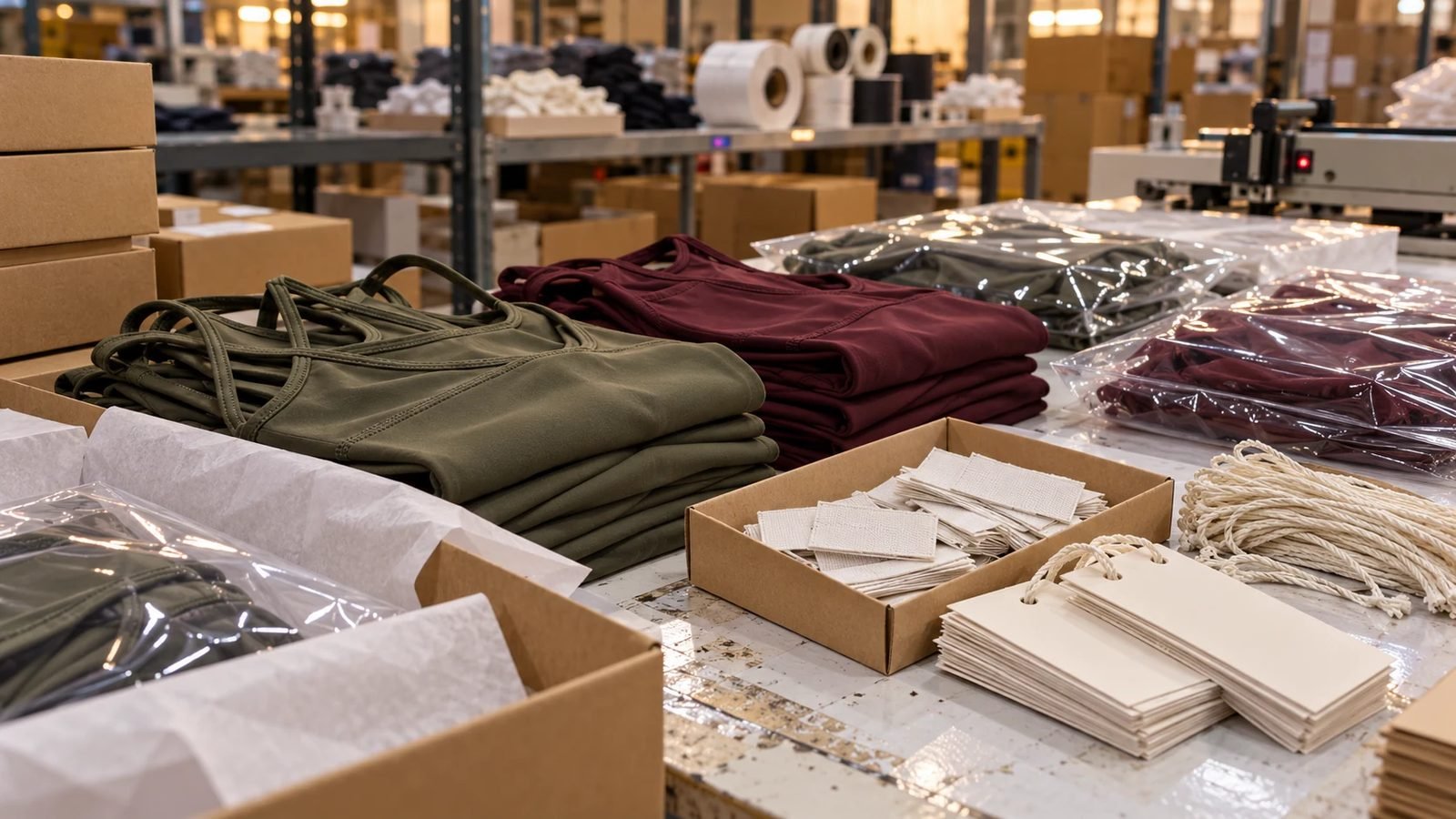
Your customer’s first physical contact with your brand is not the leggings or the bikini. It is the mailer on the doorstep, the sticker sealing the tissue, the hangtag turning between finger and thumb, the woven label at the back of the neck. For a brand that lives online, those first seconds of unboxing carry the entire weight of everything you have built on a screen. Get the trims right and an ordinary product feels considered. Get them wrong and premium fabric reads as generic.
This guide is written for founders and Amazon sellers preparing a first OEM order with a manufacturer. It walks through every branding element that goes beyond the garment itself, from logo application methods to custom clothing labels, hangtags and packaging, and it explains the compliance basics and the budget effects most suppliers never volunteer. By the end you will know exactly what to send a factory before sampling begins.
What علامة خاصة Actually Covers
Private label sounds like a small thing, a logo sewn onto a ready product. In practice it is a bundle of decisions made at the same time as the garment itself. The logo on the fabric, the woven brand label, the printed care label, the hangtag, the size sticker, the hygiene liner inside a bikini bottom and the bag it all ships in are each sourced from different trim suppliers, and each one needs artwork, content and a decision from you.
These items run on their own production schedules in parallel with your fabric and cutting, which is why a serious factory asks for them up front. A hangtag finalized late holds up packing, and packing holds up shipment. When you brief a manufacturer on a private label swimwear or activewear order, treat the trims as part of the product rather than an afterthought. Our private label service shows how the whole bundle comes together in a single quotation.
Logo Application Methods and Where Each Works
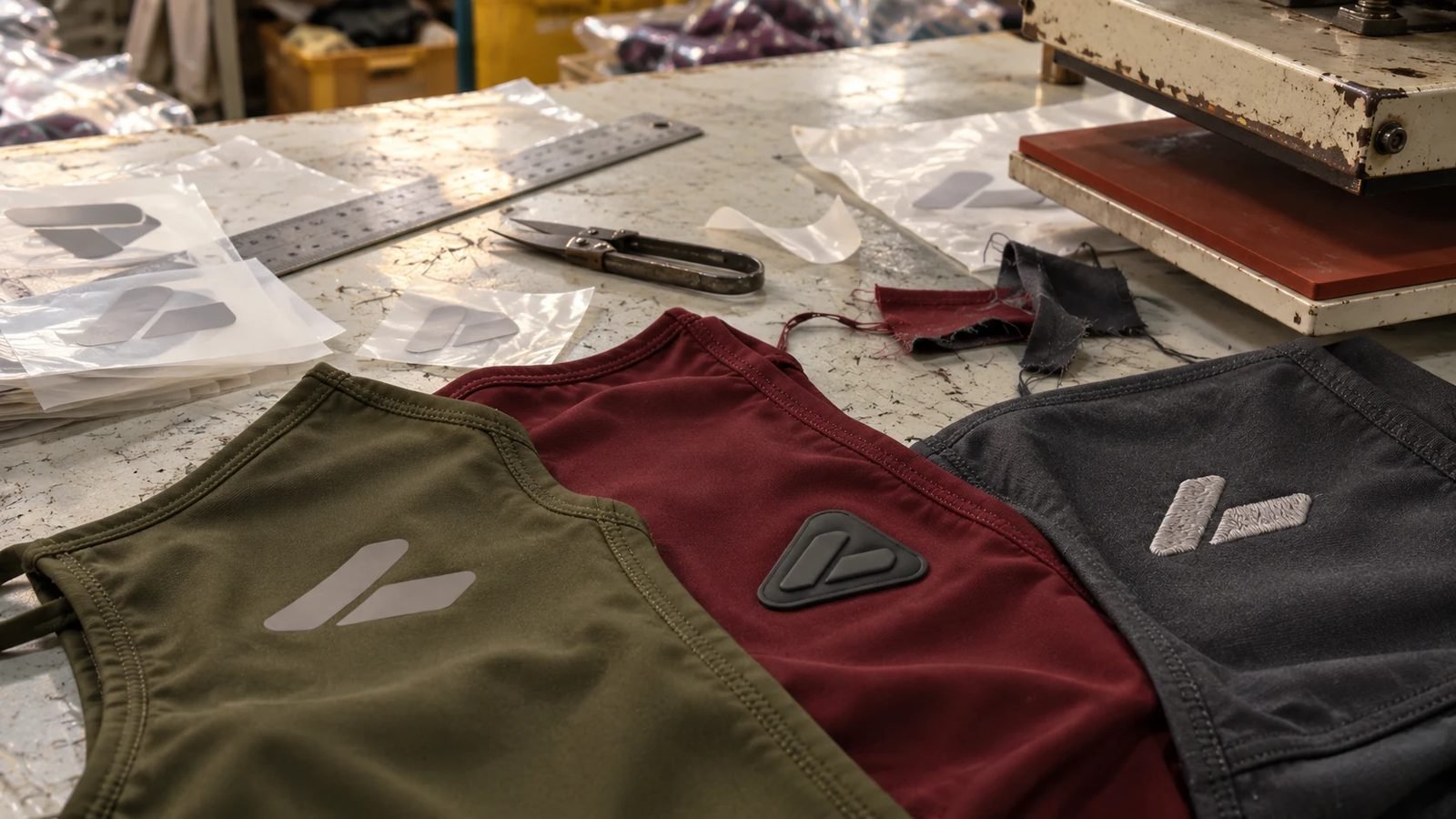
Heat transfer is the workhorse of swim and stretch categories. The logo sits flat, moves with four-way stretch fabric and survives pool water when the film is specified correctly, and the same process prints tagless care information directly onto the garment, removing the itchy sewn patch entirely. Silk screen suits bolder artwork such as chest and back graphics on tees, hoodies and cover-ups, where a slightly raised ink layer is part of the look.
Silicone logos are molded and raised, with a soft rubbery feel that reads premium on a leggings waistband or the chest of a sports bra. Embossing and debossing press the mark into or out of thicker materials for a tonal, understated effect that suits minimal brands. Reflective application earns its place on running and outdoor pieces, where low-light visibility is a selling point rather than decoration.
Flock gives a velvety, retro texture that surf and varsity-inspired brands use well, though it belongs on casual layers more than on swim. Embroidery is the oldest method and still the strongest signal of quality, but on four-way stretch swimwear fabric the stitching gathers and puckers the knit, so save it for jackets, cover-ups, caps and tote bags.
Whatever you choose, the base matters as much as the mark. We apply logos onto OEKO-TEX® STANDARD 100 certified fabrics, so the material sitting against skin all day has already passed independent testing for harmful substances.
Labels and Compliance Basics for Swim and Activewear
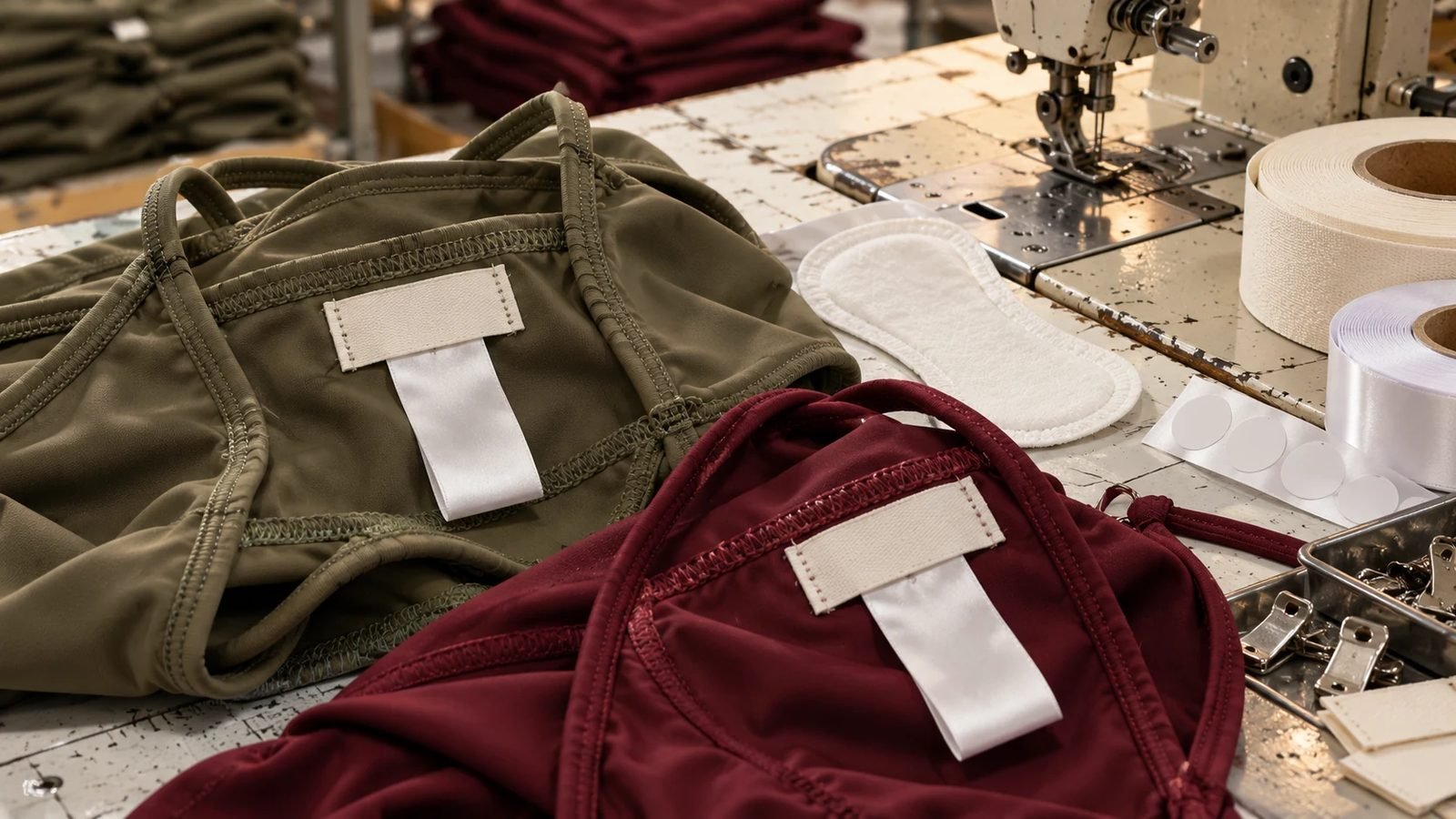
A private label garment carries two labels that do different jobs. The woven brand label is identity, usually damask or satin, sewn at the neck of a top or the back waistband of leggings, and it should outlive the garment. The care label is the legal one, typically printed on soft satin or taffeta, carrying the information regulators require. Cheap care labels crack and fade within a few washes, and on swimwear the print must also survive chlorine, salt and sunscreen without dissolving into a smudge.
In the United States, the Federal Trade Commission requires most apparel to state fiber content, country of origin and care instructions, and it expects a responsible party such as your brand or importer to be identified on the product. Marketplaces and retail buyers enforce the same checklist before they list you, so treat compliance as a design input rather than paperwork at the end. Selling into Europe adds its own language and fiber-naming rules. Your target market decides the content, which is why factories ask where you sell.
Write the care instructions for the garment you actually made. A nylon-spandex bikini and a cotton-blend hoodie need different symbols, and copying a competitor’s label is how brands end up promising machine washable on a hand wash fabric. Chlorine-resistant print on swimwear care labels costs very little and prevents the most common complaint in the category, a label that goes blank while the suit is still new.
Hangtags, Stickers and Retail-Ready Details
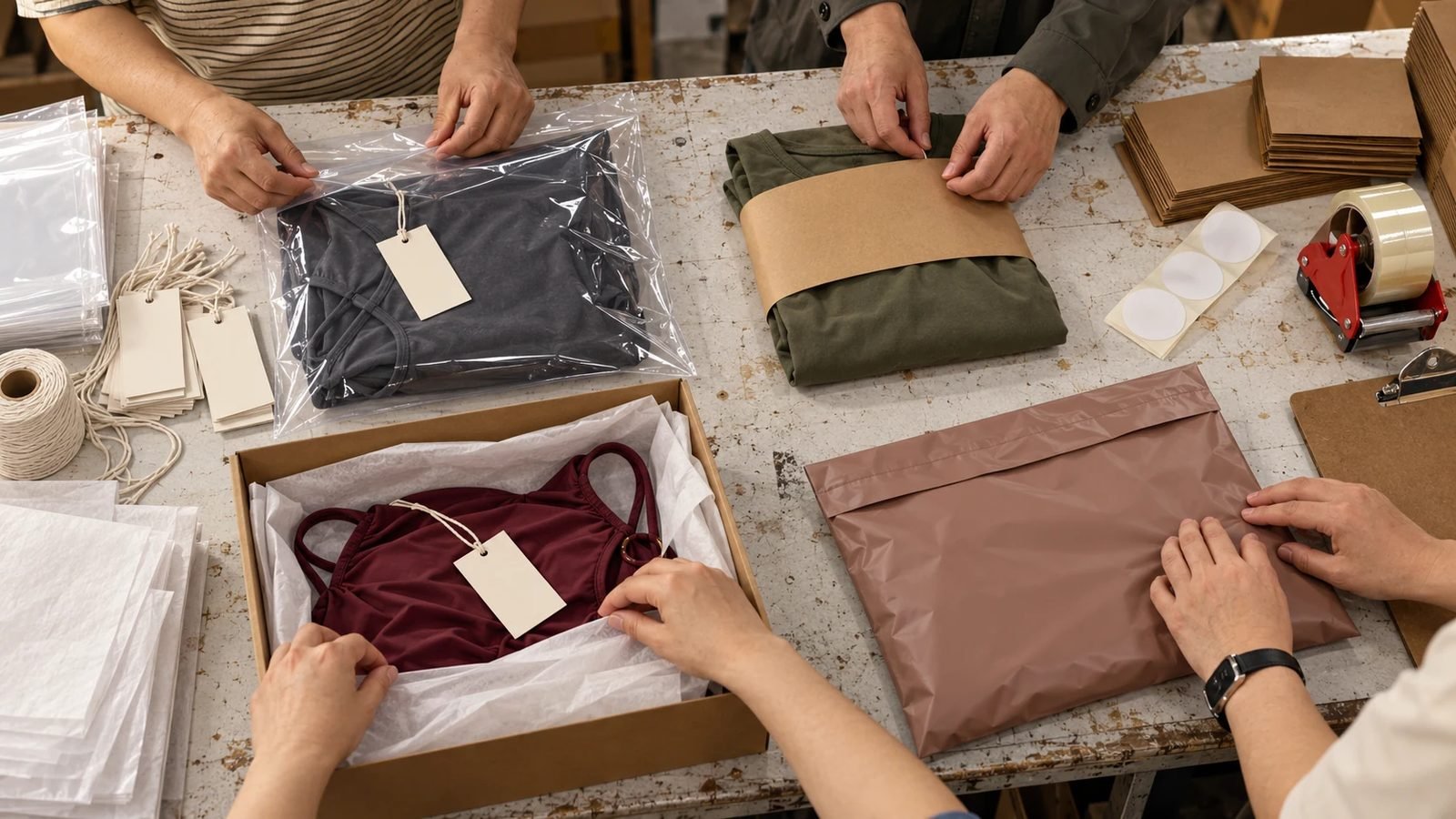
The hangtag is your smallest billboard and your last salesperson. It carries price, size and barcode, but it also carries the brand story a shopper reads in the fitting room or photographs for a friend. Recycled kraft stock sends one message, thick coated card with a foil logo sends another, and the choice of string, safety pin or plastic fastener changes how the garment hangs on the rail.
Stickers do quiet operational work. Size stickers on the outside of a polybag let a warehouse pick orders without opening the product. Hygiene liners inside swimwear bottoms reassure the customer and protect you on returns. If you sell through Amazon, the bag itself needs a suffocation warning once it crosses a certain size, and marketplaces reject stock that arrives without it. None of this is glamorous, and all of it is cheaper to get right at the factory than to fix inside a fulfillment center.
Packaging Options for Activewear and ملابس سباحة
The standard for a first order is a self-seal PE bag, one per garment, sometimes carrying a printed logo. It protects the product, keeps sizes separated and costs very little. Brands positioning higher move to boxes, belly bands or printed mailers, which photograph well in unboxing content but add cost, volume and shipping weight. Direct-to-consumer brands often skip the inner bag entirely and let a branded mailer do both jobs.
Compostable and recycled-content bags exist and we can source them, but two cautions apply. They cost more and often carry their own minimums. More importantly, any environmental claim printed on packaging is a legal claim, not a mood. Regulators in the EU are tightening the rules around green marketing, as we covered in our guide to EU green claims for swimwear brands, and vague words like eco-friendly can now create real liability. Print only what you can document.
How Labels and Packaging Affect Your MOQ and Budget
Every trim has its own upstream minimum that rarely matches your garment quantity. A woven label mill, a hangtag printer and a polybag factory each start their machines at their own floors, so a first order often produces more labels and tags than garments. The extras are not waste. A good factory stores them for your reorder, and your second order suddenly carries almost no trim cost.
Garment minimums work the same way, set by fabric and dyeing rather than by the sewing floor, which our piece on custom swimwear MOQ and fabric walks through in detail. At Enjoy Apparel, a private label run begins at a minimum of 100 pieces for each style, and we cost the full trim package into the same quotation, so the number you approve already includes labels, tags and bags.
Standardizing saves the most money. One label design, one hangtag layout and one bag size shared across a whole range spread every setup cost thin, which is how established brands keep trims invisible in their margins. We have run private label programs this way for clients that include Free People and Monday ملابس سباحة, and the same discipline works at first-order scale.
What to Send Your Manufacturer
The fastest sampling rounds start with a complete brief. Before you ask for pricing, have these ready.
- Your logo as a vector file, meaning AI, EPS or PDF, because a screenshot cannot be separated for printing.
- Pantone codes for your brand colors, since dusty rose means something different at every print house.
- Logo placement with measurements, ideally inside a tech pack, so the print lands exactly where you pictured it.
- Care label content for each fabric you use, covering fiber composition, country of origin and care instructions.
- A packaging specification covering bag or box, dimensions and printing, plus whether you want hangtags and stickers.
- Your target markets, because the compliance content for the United States differs from Europe and the Middle East.
Pull these six items together and a manufacturer can quote accurately in days instead of weeks of back-and-forth. If you are mapping out a first private label order in swimwear or activewear, email your artwork and tech pack to admin@zsenjoyco.com, or reach the team through our contact page. You will hear back with logo method recommendations, label and packaging options, swatches from a fabric library that runs past 5,000 qualities, and a realistic timeline for your launch.
Frequently Asked Questions
What is private label activewear?
Private label activewear is product made by a manufacturer and sold under your brand, carrying your logo, labels, hangtags and packaging instead of the factory’s. It sits between buying blank wholesale stock and developing fully custom ODM designs, and for most startup brands it is the fastest credible route to market.
What is the best logo method for swimwear?
Heat transfer is the category standard because it lies flat, stretches with the fabric and can double as a tagless care label. Silicone works well for a raised premium mark on waistbands. Avoid embroidery on four-way stretch swim fabric, since the stitching puckers the knit; save it for jackets and cover-ups.
What labels are legally required on swimwear sold in the United States?
Most apparel sold in the US must show fiber content, country of origin and care instructions, with the brand or importer identified as the responsible party. Marketplaces apply the same checklist before listing your product, so build these elements into your label artwork from the start rather than retrofitting after production.
Can I market my packaging as eco-friendly?
Only with evidence. Regulators, especially in the EU, now expect environmental claims to be specific, substantiated and verifiable. Compostable or recycled-content packaging backed by supplier documentation is a defensible claim. A green leaf icon next to the word sustainable is not.

